


Over the past decade, GWM has transformed from a value-focused challenger brand into one of the fastest-growing automotive brands in Australia and New Zealand.
Today GWM offers everything from diesel utes to hybrids, plug-in hybrids, and battery-electric vehicles across the Haval, Tank, Cannon and Ora brands, and is firmly targeting a place among the top-five auto brands in both markets.
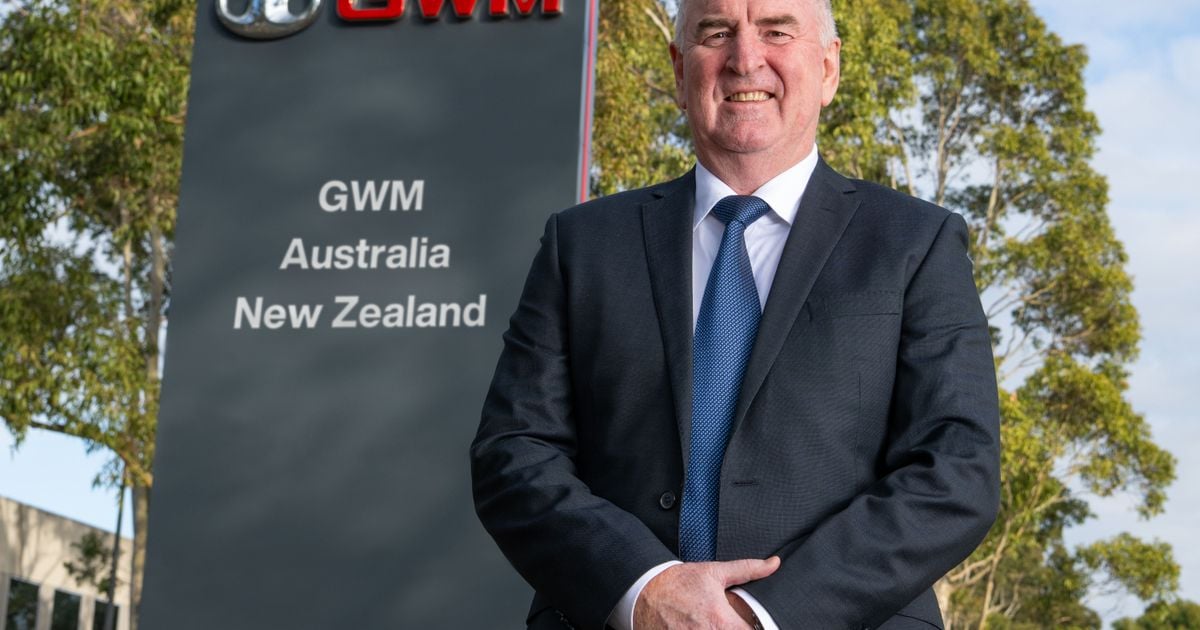
During a wide-ranging interview with CarExpert, GWM Australia and New Zealand chief operating officer John Kett discussed the company’s rapid growth, its local engineering program, why diesel still has a future, the brand’s upcoming V8, and how GWM plans to stand apart in an increasingly crowded market.
Looking for your next car? We’ll help you research and compare so you choose with confidence.

GWM is now in its 18th year in Australia and New Zealand. It’s grown from an unknown challenger brand into a mainstream player. What’s been the biggest driver behind that success?
I think it started around 10 years ago when we became a true sales company managing the business ourselves. At that point we were targeting price points that many manufacturers had abandoned.
We were able to bring small SUVs to market that offered plenty of space, good technology and strong value, giving customers an alternative to buying a used vehicle.
As time has gone on, it hasn’t just been about price. We’ve continued to improve the quality, durability and warranty behind our vehicles, while evolving our technology across the range.
Today, when we talk about our ambition to become a top-five brand – and ultimately a top-three brand – we believe the only way to achieve that is to be competitive across every powertrain.
We want to be top five in petrol and diesel, top five in hybrid, top five in plug-in hybrid, and top five in electric vehicles.
That means understanding customers as well as we can and giving them technology that suits their lifestyle. Where they live, how they use their vehicle, whether it’s for work or family, and ultimately what fits their budget.
We’ve been able to offer that across each of those areas, and that’s become a defining part of who GWM is.
Internally, we often say, “You have permission to be GWM.”
We’re not trying to be known purely as an EV brand or purely as a plug-in hybrid brand. We want to be all of those things. The focus is on delivering what customers actually need and backing it up with a continually improving ownership experience.
Despite being in both markets for almost two decades, do you still find there are misconceptions about GWM and what the brand stands for?
Absolutely. One of our biggest challenges is helping people understand the relationship between GWM and its various sub-brands.
People ask, “Who is Ora? Who is Haval? Who is Tank? Who is Cannon?” Then later this year we’ll introduce Wey as well.
It’s understandable that some customers are still trying to work out how everything fits together.
Haval has the strongest recognition because it built our early volume success, but we’re still working to establish stronger awareness of Tank, Ora and Cannon while connecting them back to the GWM brand.
That’s probably our biggest branding challenge today.
The other opportunity is fleet.
Historically we’ve been very successful in the retail market, but we haven’t had a strong presence with small and medium-sized businesses, fleet operators or leasing companies.
Now those customers are seeing the confidence private buyers have developed in GWM products, and that’s starting to translate into the fleet market as well.
Both of those areas present significant opportunities for future growth.
How much influence do you have over the vehicles that come to Australia and New Zealand? Can you genuinely shape products with headquarters in China?
I think we’re already demonstrating that through our localisation program.
Australian and New Zealand roads are unique, so ride, handling and steering characteristics need to be considered during development.
Historically we’ve been making changes after production to better suit local conditions, but increasingly that work is feeding into the development process much earlier.
When it comes to the product itself, headquarters is very open.
There aren’t many vehicles they won’t build in right-hand drive, so we have access to a very broad portfolio.
The real challenge isn’t whether we can have a particular model – it’s deciding which grades and which powertrains make sense for our markets.
Australia is already complex enough, but New Zealand becomes even more complicated because it’s a smaller market.
Auckland might support a wide variety of grades and powertrains, but as you move into smaller regional markets you don’t want unnecessary complexity.
That’s really where our focus is – simplifying the lineup while still offering customers the right choice.
Local engineering has become a real point of difference for GWM, particularly among Chinese brands. With the Lang Lang proving ground now sold, how is the local engineering operation progressing?
We’re close to signing off on a new technical centre in Melbourne.
It’ll become our engineering base, allowing Rob [Trubiani] and the team to continue local ride, handling and steering development, while also serving as our technical training centre.
One of our goals is to establish 14 training curriculums that allow service technicians to progress all the way to master technician level for GWM products.
The facility will also house technical research, allowing us to investigate vehicle issues locally while supporting engineering projects from headquarters.
China has also assigned four engineers to work alongside us every day.
They’re helping us identify issues earlier, resolve problems faster, support local accessory development, and improve communication between Australia, New Zealand and headquarters.
Having everyone together under one roof is a major investment for us.
We’ll certainly miss the facilities at Lang Lang, particularly the high-speed circuit and off-road testing areas, but Rob is confident we can recreate those testing environments elsewhere.
It’ll be more complicated, but we’ll continue investing in local engineering exactly as we said we would.
Have you seen evidence that the work being done in Australia and New Zealand is influencing vehicle development globally?
Absolutely. One thing I noticed after the Beijing motor show was just how much emphasis headquarters was placing on aftersales support and technical services.
When we returned to Baoding, we ended up spending an entire day discussing aftersales. It showed a real understanding that technical support, responsiveness and customer service are critical to the next stage of growth.
They’re not glamorous topics and you can’t really advertise them, but they’re fundamental to building a successful business.
It’s about having the technical capability on the ground to repair vehicles quickly, getting customers back on the road sooner, and ensuring headquarters can work seamlessly with us whenever we encounter issues that can’t be resolved locally.
Every market represented at those meetings had similar priorities. We all wanted faster technical support, better diagnostic tools, improved integration with digital service manuals, and more responsive systems.
Not that long ago we were still working from PDF service manuals, so we’ve come a long way. All of those improvements make the business more efficient and ultimately improve the ownership experience.
The local tuning work Rob and the engineering team are doing is also starting to influence future global products.
You often see this with manufacturers that invest in local development. The first round of tuning might involve significant changes, but over time those refinements begin appearing in the next-generation vehicles straight from the factory.
As that happens, the amount of local tuning required becomes smaller because the global product has already improved.
We’re also seeing other markets request some of the work that’s been developed here. The engineering being done for Australia and New Zealand is finding its way into the base ride, handling and steering characteristics of GWM products globally.
Headquarters has been incredibly receptive. They’re engaged, respectful and willing to listen, and there’s no arrogance in the process. That’s probably one of the reasons we’re able to move so quickly.
You touched on it earlier, but GWM offers petrol, diesel, hybrid, plug-in hybrid and electric vehicles. Do you see that broad approach as the future, not just for GWM but for the wider industry?
We do, particularly when it comes to body-on-frame vehicles like utes and large SUVs.
We still see a genuine role for diesel, which is why we’re continuing to invest in it.
You’ll see new 3.0-litre diesel engines in vehicles like the Tank 500 and Cannon Alpha, and you’ll also see us evolve that technology into hybrid applications.
Longer term, the corporation has even spoken about plug-in hybrid diesel technology.
We believe there are still plenty of situations where diesel remains the best solution. If you’re towing every day or living in a very remote area, diesel can still make the most sense.
At the same time, we’re seeing rapid progress with our Hi4-T and Hi4-Z plug-in hybrid systems.
Although Hi4-Z hasn’t been launched in Australia or New Zealand yet, we believe these technologies are closing the gap between traditional diesel vehicles and electrification.
As battery technology improves and customers become more familiar with plug-in hybrids, more people are realising they don’t necessarily need a diesel vehicle for every application.
We think we’re in a very strong position because we offer all of those alternatives.
You’ll start seeing Hi4 technology arrive in the Cannon around September, while our medium SUV lineup and everything below it will eventually have a fully electrified alternative.
That’s how we’re segmenting the business.
One of the biggest stories recently has been GWM’s new V8 engine. What’s the outlook for Australia and New Zealand?
I don’t think we’ve officially announced everything yet, but I can say you’ll definitely see a V8 in one of our products next year.
Initially it’ll most likely appear in one of our Tank models before expanding into other vehicles over time.
So it’s not a question of whether we’re bringing it – we are. We’re simply not ready to announce exactly which product will receive it first.
Part of the reason we’re being conservative is because we know we’ll be able to offset the emissions impact through the strength of our plug-in hybrid and EV lineup.
Once we announce it we’ll probably open pre-orders, and that’ll give us a better understanding of demand and how we manage the overall emissions balance.
There’s no doubt the V8 is coming.
At a time when everyone is focused on emissions, we believe we can still introduce a V8 while remaining compliant with regulations in both Australia and New Zealand.
That leads into regulation. If you had one message for governments on both sides of the Tasman, what would it be?
From our perspective, we’re comfortable working within whatever emissions regulations governments decide to implement.
We’ll adapt.
What concerns me more is the increasing cost of doing business.
Across both Australia and New Zealand we’re seeing regulatory costs, compliance requirements, taxes and ‘invisible taxes’ rising faster than the margins dealers are able to generate.
That’s becoming a real issue.
It’s particularly challenging for our dealer network, which is the most entrepreneurial part of our business.
Dealers continue becoming more efficient and improving their operations, but they’re struggling to offset the rising cost of compliance.
For me, the priority should be reducing red tape, making it easier to run businesses and supporting those smaller entrepreneurs who are investing in local communities.
That’s where I’d like to see governments focus their attention.
There’s been plenty of disruption across the industry in recent years, from geopolitical tensions to supply chain challenges. Looking ahead, what excites you most about the auto industry?
Taking my GWM hat off for a moment, I’m really interested to see how some of the established brands respond.
Chinese manufacturers have made enormous progress over the past few years, and they’ve done that because they’ve identified opportunities that others left open.
Some brands may continue to shrink or even leave certain markets, but history tells us that periods like this often produce the biggest innovations.
Someone will come up with something unexpected – a real game-changing idea that shifts the industry again.
That’s what excites me most. The automotive industry has always been incredibly dynamic, and there’s always someone working on the next big thing.
From a GWM perspective, I’m equally excited by the breadth of the portfolio we’re building.
By the end of next year we’ll have one of the broadest model ranges in Australia and New Zealand, if not the broadest.
We won’t just offer petrol and diesel. We won’t just offer hybrids, plug-in hybrids or EVs either.
We’ll have products across every major powertrain category, giving customers genuine choice regardless of where they are in their transition to electrification.
That gives us all the tools we need to pursue our ambition of becoming a top-five brand.
More importantly, we want customers to feel they aren’t being forced into one technology or judged on what they choose to drive.
If someone wants a petrol vehicle, we’ll have one. If they want a diesel, a hybrid, a plug-in hybrid or an EV, we’ll have those too.
Customers can simply choose the vehicle that suits their lifestyle and become part of the GWM family.
Internally, that’s something we remind ourselves of all the time. We respect our competitors and we learn from them, but we don’t need to become them. We have permission to be GWM.
That means continually evolving our products, offering one of the broadest ranges in the market across different powertrains and transmissions, and still being brave enough to bring back a V8 while meeting all of our corporate responsibilities.
That’s what excites me about where we’re heading.
GWM’s V8 seems to go against the industry’s current direction. How do you balance that with increasingly strict emissions regulations?
The corporation is obviously developing its supercar, and that’ll almost certainly be the first application for the V8 plug-in hybrid powertrain.
When we talk about bringing a V8 back, though, it’s almost treated as something you shouldn’t even discuss.
Our view is different.
We’re not looking at bringing in just a handful of vehicles to make a statement. We’ll either pay any penalties that come with it or benefit from the credits we’ve earned elsewhere in the range.
Philosophically, we don’t want to build up emissions credits simply to sell them. We’d rather sit right on the line.
That’s probably a more stressful way to operate because you’re constantly balancing one side against the other, but if we get it right it means we’ve satisfied every type of customer.
That’s ultimately our objective.
You’re well on the way to becoming a top-five brand. What will cement that position in both Australia and New Zealand?
I think the next wave of products we’re launching will drive the next stage of growth.
In New Zealand, though, we’re already seeing the return from investing in a dedicated local leadership team that genuinely understands the market.
That team has built a stronger GWM New Zealand business, and the results we’re seeing today reflect that investment.
Our dealer network can see the progress, which gives them confidence.
Fleet customers are seeing it too, and that’s creating momentum into the next phase of growth.
The new products will be a big part of that story, but while we’re focused on becoming a top-five sales brand, we’re equally focused on becoming a top-five ownership experience brand.
That’s the bigger objective.
We’re working hard to define exactly what that ownership experience should look like, and we’re confident we’ll get there.
MORE: Explore the GWM showroom
