

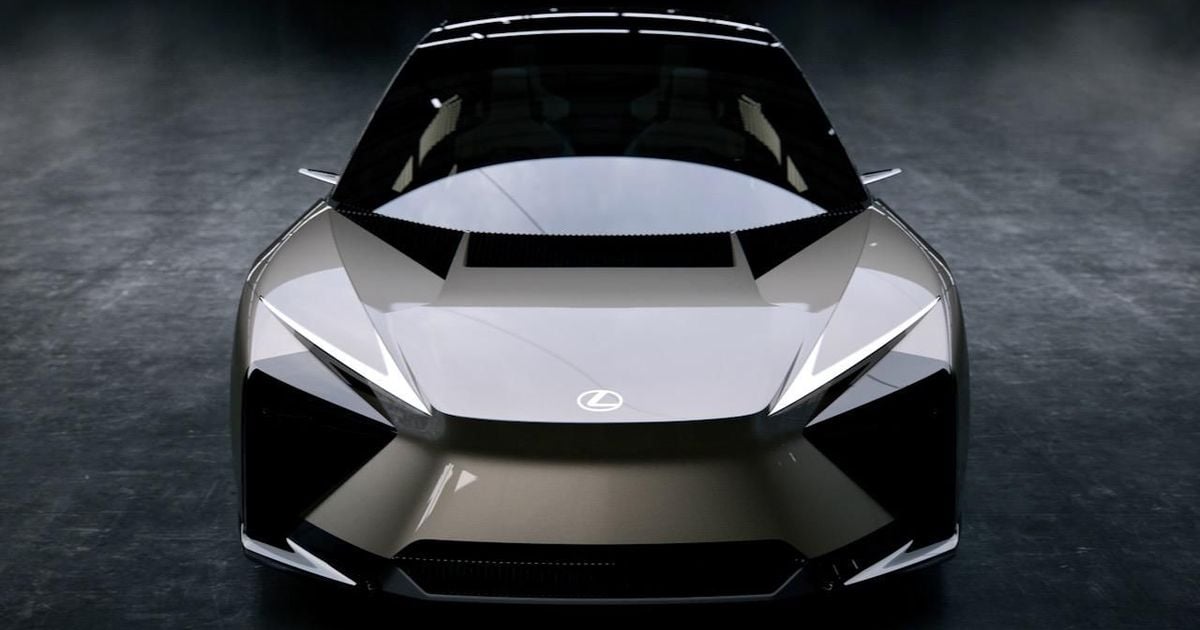

Toyota hasn’t given up on the idea of a flagship electric vehicle (EV) for its luxury Lexus brand, as parts and technology from a recently cancelled EV project will instead be reused on a new vehicle.
Lexus announced earlier in June 2026 that it had scrapped development of a production version of the 2023 LF-ZC concept, citing a “company-wide review of vehicle development projects, taking into account fluctuations in market demand” as the reason for the cancellation.
The production LF-ZC was expected to be an electric replacement for the ageing Lexus IS sedan, with production speculated to begin as early as this year. It therefore seems development was relatively far progressed, but Toyota has reportedly confirmed that not everything is lost.
According to Japanese publication Nikkei, Toyota executive vice president Hiroki Nakajima said the brand has “decided to develop a successor vehicle” that will use many of the advanced processes and components that were locked in for the LF-ZC.
Looking for your next car? We’ll help you research and compare so you choose with confidence.

Such elements reportedly include the LF-ZC’s new-generation battery and its gigacast.
Gigacasting is an advanced manufacturing technique that creates large, single-piece cast vehicle components, eliminating the need for more traditional multi-piece welded components.
Pioneered by Tesla, gigacasting aims to simplify vehicle body parts, reduce manufacturing costs, streamline production processes, and lower vehicle weight. The LF-ZC was set to be among the first of Toyota’s EVs to use such a process, regardless of the vehicle’s badge.
“However, many new technologies cultivated during the development of thfe LF-ZC, such as gigacast, a new electrical and electronic platform for advanced driver-assistance systems (ADAS), and miniaturisation and weight reduction, have already been completed,” Nakajima-san said.
As such, Nakajima-san confirmed that those technologies were still ready for mass production, though there has been no information so far on the vehicle that will be built instead. It’s entirely possible it won’t be a sedan at all, as indicated by Lexus’s other futuristic EV concept from 2023, the more SUV-like LF-ZL.
Underpinning both concepts is a high-performance prismatic battery, claimed to deliver roughly twice the driving range of conventional lithium-ion batteries while enabling faster charging times.
Inside, the LF-ZC was to use Toyota’s new Arene OS software, which features AI integration and is said to provide personalised information based on driver habits. Such technology will likely still appear at some point.
Lexus previously announced plans to go all-electric by 2035, a transition that would have been supported by the addition of models like the LF-ZC. It would also have been part of Toyota’s goal for Lexus to sell one million EVs by 2030.
While Lexus shelved the LF-ZC, it recently revealed a new electric SUV, the TZ, and previewed a new supercar with the electric LFA Concept.
MORE: Lexus cancels electric IS replacement
MORE: Explore the Lexus showroom
