

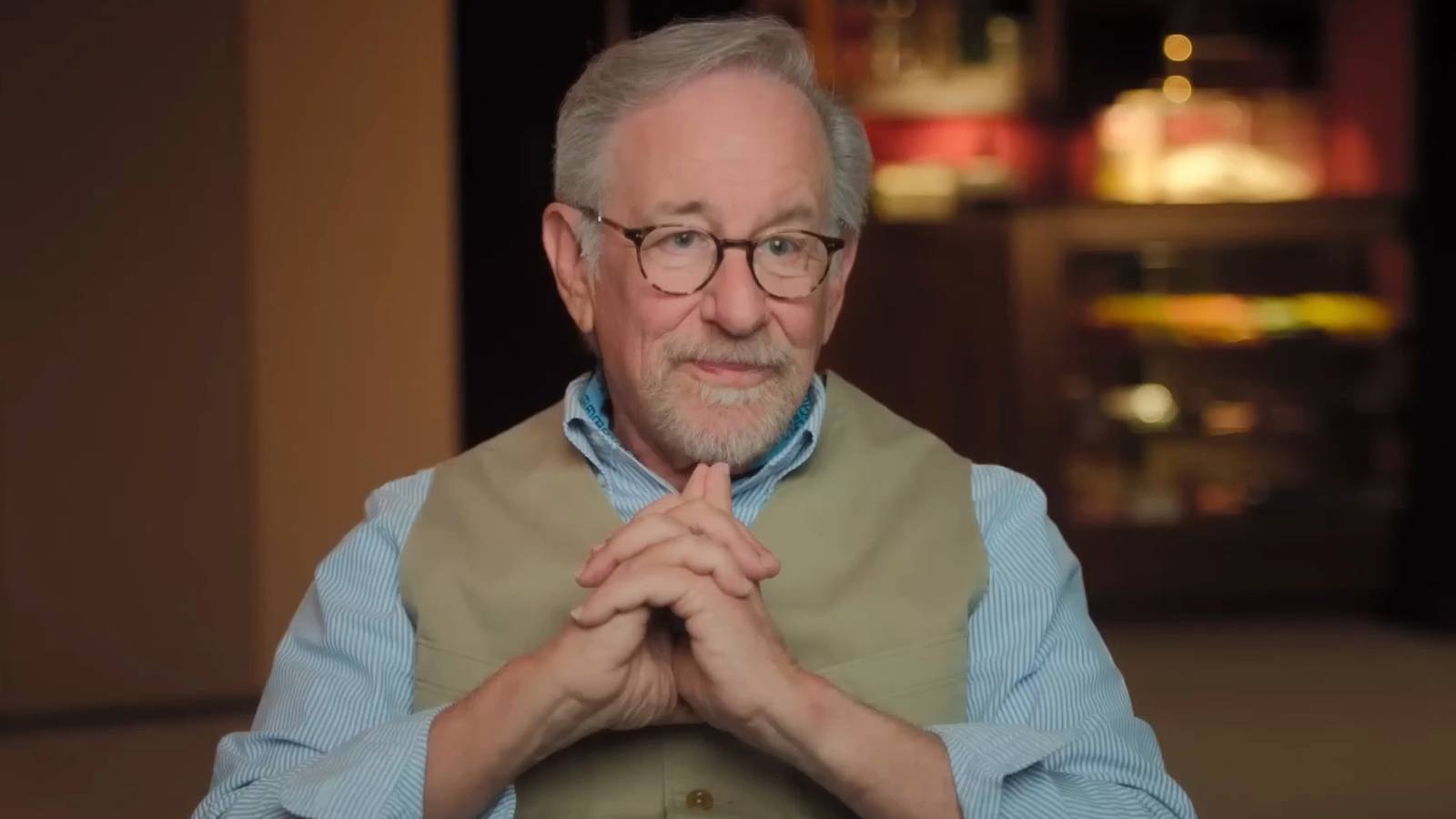

If you were asked to single out Steven Spielberg’s most important collaborator, and you said John Williams, you’d probably be right, in all honesty. It’s hardest to imagine what Spielberg’s filmography would look like (or, more specifically, sound like) without the music of John Williams accompanying the vast majority of his films. They also go back more than 50 years, further than Jaws, even (which was understandably the first really iconic score for a Spielberg film), because their first collaboration was for the rather overlooked and underrated The Sugarland Express (1974). But if you were asked to single out Spielberg’s most frequent collaborator, and you said John Williams, you’d be wrong… just.
At the present count, Williams has composed the scores for 30 Spielberg movies, and that’s including Disclosure Day (2026), which, at the time of writing, hasn’t yet been released. Williams didn’t score West Side Story (2021), nor Spielberg’s segment of Twilight Zone: The Movie, nor The Color Purple. Michael Kahn, as Spielberg’s go-to editor, did edit or co-edit all those movies, though. And despite not doing a Spielberg movie until 1977, Kahn was credited for Twilight Zone: The Movie, The Color Purple, and West Side Story, so he pulls ahead. He is the name you’ll see most often in the credits, if you go through Spielberg’s filmography, and he deserves the kind of recognition that John Williams has received, owing to how instrumental Kahn has been throughout Spielberg’s career.
The Role Michael Kahn Has Played Throughout Steven Spielberg’s Career

So, unlike Williams, Michael Kahn did not play a role in the production of The Sugarland Express or Jaws, with Close Encounters of the Third Kind being his first credit. Looking over his filmography pre-1977 reveals mostly obscure movies, so his work’s really quite tied with Spielberg. Kahn’s won three Academy Awards from eight nominations, with all three wins being for Spielberg films, and the only non-Spielberg nomination being for Fatal Attraction. Williams, of course, has composed for plenty of well-known movies that weren’t directed by Spielberg, including the nine main Star Wars movies, three of the Harry Potter films, and Superman (1978).
Kahn’s currently 95 years old… which puts him in line with John Williams and his much-celebrated longevity, as a composer.
It should also be noted that for Kahn to “overtake” Williams, you have to include the movies he co-edited. Since 2011’s The Adventures of Tintin, Sarah Broshar has been credited as either an assistant editor, an additional editor, or a co-editor on Spielberg’s movies, but Kahn’s currently 95 years old, so being active as an editor at all at that age is impressive. This does, of course, put him in line with John Williams and his much-celebrated longevity, as a composer, since Williams is still active in 2026, at the age of 94. They really are living legends, and Spielberg’s clearly valued their contributions over the decades, since he’s worked with them time and again.
How Important the Editing Is in So Many Spielberg Movies
While it would be wonderful if everyone appreciated the role editors played in the whole filmmaking process, that’s not always the case. The art of editing is best understood if you’ve actually tried to piece together footage, music, sound effects, and all sorts of other things yourself, and realized how hard it was to do it well. Further, good editing is usually the kind that you’re not supposed to notice or think about all that much, so if a movie is flowing along well, you’re losing track of time, and you’re getting engrossed in the story/performances/effects/music, then the editing is a big reason why, but then you’re also probably not thinking about it.
Michael Kahn has certainly played a role in making a great many Steven Spielberg movies pass by effortlessly. Saving Private Ryan runs for almost three hours, and yet it does not feel it. Raiders of the Lost Ark (and its sequels, for the most part) succeed in feeling absolutely non-stop and relentlessly entertaining, as action movies, and then Schindler’s List is a three-hour epic that proves frighteningly immersive, with the editing – alongside the great screenplay and Spielberg’s direction – ensuring it feels comprehensive and yet never overlong. If you’ve never thought specifically about the editing regarding some of these movies, then maybe that’s because Kahn did his job perfectly. He can’t take credit for E.T. the Extra-Terrestrial, as that’s the only post-1977 Spielberg movie Kahn didn’t edit or co-edit, but otherwise, he’s been there consistently, both for the good films and the (very occasionally) less-than-great ones. But, hey, the same goes for John Williams. Not all the movies featuring his music have been great, necessarily.
Other Collaborators Beyond John Williams and Michael Kahn Who Are Worth Noting

In the interest of shouting out a few more people, Kathleen Kennedy (though somewhat divisive, as a figure, during her time overseeing Star Wars) has been a significant collaborator with Steven Spielberg, having been a producer or executive producer for so many movies of his from the early 1980s onward. Also, though he didn’t start working with Spielberg as early as either John Williams or Michael Kahn, Janusz Kamiński has amassed plenty of credits on Spielberg productions from 1993 onward, as he first worked as a cinematographer for the filmmaker on Schindler’s List, becoming his go-to cinematographer from that point forward.
And then there are the actors, of course, with Tom Hanks being in his fair share of Steven Spielberg movies, Harrison Ford being in a fair few (well, thanks to being Indiana Jones in four Spielberg-directed movies, but still), and then, more recently, Mark Rylance has also popped up several times. Those actors, and then John Williams (thanks to his music being so central, noticeable, and even earwormy), might stand out more prominently as Spielberg collaborators, but Michael Kahn’s name shouldn’t be left out, either. Spielberg’s movies just about always move, and the seamless/naturalistic editing Kahn employs works well with Spielberg’s unpretentious and sometimes almost-invisible directing style. They’re both so good at what they do that you might not even notice how good they really are, unless you’re on the lookout for signs of their remarkably effortless greatness.

Spielberg
- Release Date
-
October 5, 2017
- Runtime
-
140 minutes
- Director
-
Susan Lacy
- Producers
-
Emma Pildes
