Skip to content
Close Menu

    Subscribe to Updates

    Get the latest news from tastytech.

    What's Hot

    How To Find The Secret Destiny 2 Exotic Mission And Get Cull’s Shadow

    June 23, 2026

    The Last Viking review – Danish dark comedy is a…

    June 23, 2026

    Ford’s Ranger-sized affordable electric ute will use a platform that supports right-hand drive

    June 23, 2026
    Facebook X (Twitter) Instagram
    Facebook X (Twitter) Instagram
    tastytech.intastytech.in
    Subscribe
    • AI News & Trends
    • Tech News
    • AI Tools
    • Business & Startups
    • Guides & Tutorials
    • Tech Reviews
    • Automobiles
    • Gaming
    • movies
    tastytech.intastytech.in
    Home»AI News & Trends»Pinterest Gives Users the Power to “Turn Down the AI” — But Not Completely
    Pinterest Gives Users the Power to “Turn Down the AI” — But Not Completely
    AI News & Trends

    Pinterest Gives Users the Power to “Turn Down the AI” — But Not Completely

    gvfx00@gmail.comBy gvfx00@gmail.comOctober 22, 2025No Comments2 Mins Read
    Share
    Facebook Twitter LinkedIn Pinterest Email


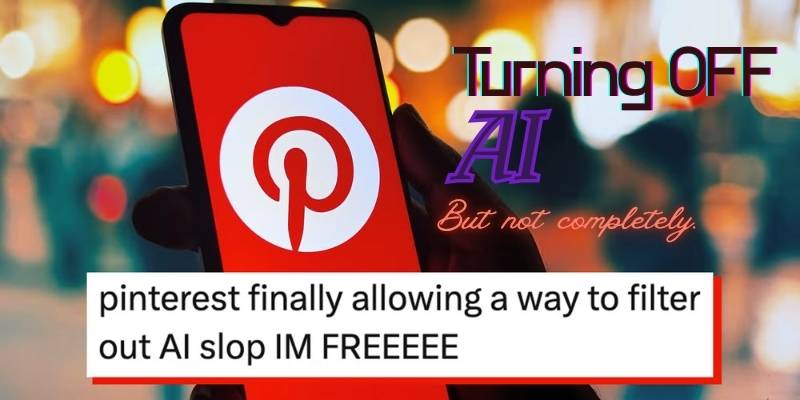
    Pinterest has introduced a new control feature that lets users decide how much AI-generated content appears in their feeds.

    The update, dubbed the “AI tuner,” allows people to reduce or increase machine-generated posts in popular categories like beauty, art, fashion, and home décor, as reported in The Verge’s breakdown of the feature. But the catch? You can’t shut it off entirely.

    The new setting appears under “Refine your recommendations” in Pinterest’s “GenAI Interests” tab, and it’s already available on desktop and Android, with iOS support rolling out soon.

    The company says it’s a step toward transparency and user control after months of feedback about AI “infesting” creative categories.

    That issue first surfaced back in May when Pinterest started tagging posts with an “AI modified” label, a move echoed by Meta’s decision to label synthetic media across Facebook and Instagram.

    But here’s where it gets interesting — the debate isn’t just about labeling, it’s about trust. With AI models generating millions of images daily, users are asking whether they can still distinguish real art from algorithmic imitations.

    A recent Reuters report on social media moderation noted that even trained moderators are struggling to tell the difference between human and AI imagery.

    That blurring of creative lines has fueled a growing movement toward authenticity — one that’s now becoming a defining issue in visual culture.

    Experts argue this could be the start of a broader shift in how platforms handle AI transparency. Just last week, YouTube expanded its AI disclosure rules for creators, requiring them to flag synthetic or altered media that could mislead viewers.

    Pinterest, in its quieter, design-first way, seems to be leaning into a similar philosophy — not banning AI but giving users agency over it.

    Personally, I like this middle ground. It feels realistic — like admitting AI is here to stay but letting people decide how much of it they want in their creative spaces.

    Still, I can’t help but think of what happens next. What if we start “tuning out” human content instead? The irony writes itself.

    And as platforms like Pinterest, Meta, and YouTube scramble to define transparency, maybe the real challenge isn’t detecting AI anymore — it’s remembering what unfiltered human creativity even looks like.

    Table of Contents

    Toggle
      • Related posts:
    • South Korea Just Drew the World’s Sharpest Line on AI
    • Mydreamcompanion Girl Generator — Full 17-Step Guide
    • CFOs Bet Big on AI-But Warn the Real Wins Come Only When Strategy Takes the Wheel

    Related posts:

    New control system teaches soft robots the art of staying safe | MIT News

    Using generative AI to diversify virtual training grounds for robots | MIT News

    MIT affiliates win 2026 Hertz Foundation Fellowships | MIT News

    Share. Facebook Twitter Pinterest LinkedIn Tumblr Email
    Previous ArticleHow AI adoption is moving IT operations from reactive to proactive
    Next Article OpenAI launched a ChatGPT Atlas Browser – here are the 5 things you need to know
    gvfx00@gmail.com
    • Website

    Related Posts

    AI News & Trends

    New chip could help tiny robots traverse complex environments | MIT News

    June 23, 2026
    AI News & Trends

    A better way to model the behavior of metal alloys | MIT News

    June 19, 2026
    AI News & Trends

    MIT in the media: For the future of tech, “Massachusetts can absolutely lead” | MIT News

    June 18, 2026
    Add A Comment
    Leave A Reply Cancel Reply

    Top Posts

    Black Swans in Artificial Intelligence — Dan Rose AI

    October 2, 2025205 Views

    Every Clue That Tony Stark Was Always Doctor Doom

    October 20, 2025129 Views

    We let ChatGPT judge impossible superhero debates — here’s how it ruled

    December 31, 202599 Views
    Stay In Touch
    • Facebook
    • YouTube
    • TikTok
    • WhatsApp
    • Twitter
    • Instagram

    Subscribe to Updates

    Get the latest tech news from tastytech.

    About Us
    About Us

    TastyTech.in brings you the latest AI, tech news, cybersecurity tips, and gadget insights all in one place. Stay informed, stay secure, and stay ahead with us!

    Most Popular

    Black Swans in Artificial Intelligence — Dan Rose AI

    October 2, 2025205 Views

    Every Clue That Tony Stark Was Always Doctor Doom

    October 20, 2025129 Views

    We let ChatGPT judge impossible superhero debates — here’s how it ruled

    December 31, 202599 Views

    Subscribe to Updates

    Get the latest news from tastytech.

    Facebook X (Twitter) Instagram Pinterest
    • Homepage
    • About Us
    • Contact Us
    • Privacy Policy
    © 2026 TastyTech. Designed by TastyTech.

    Type above and press Enter to search. Press Esc to cancel.

    Ad Blocker Enabled!
    Ad Blocker Enabled!
    Our website is made possible by displaying online advertisements to our visitors. Please support us by disabling your Ad Blocker.