
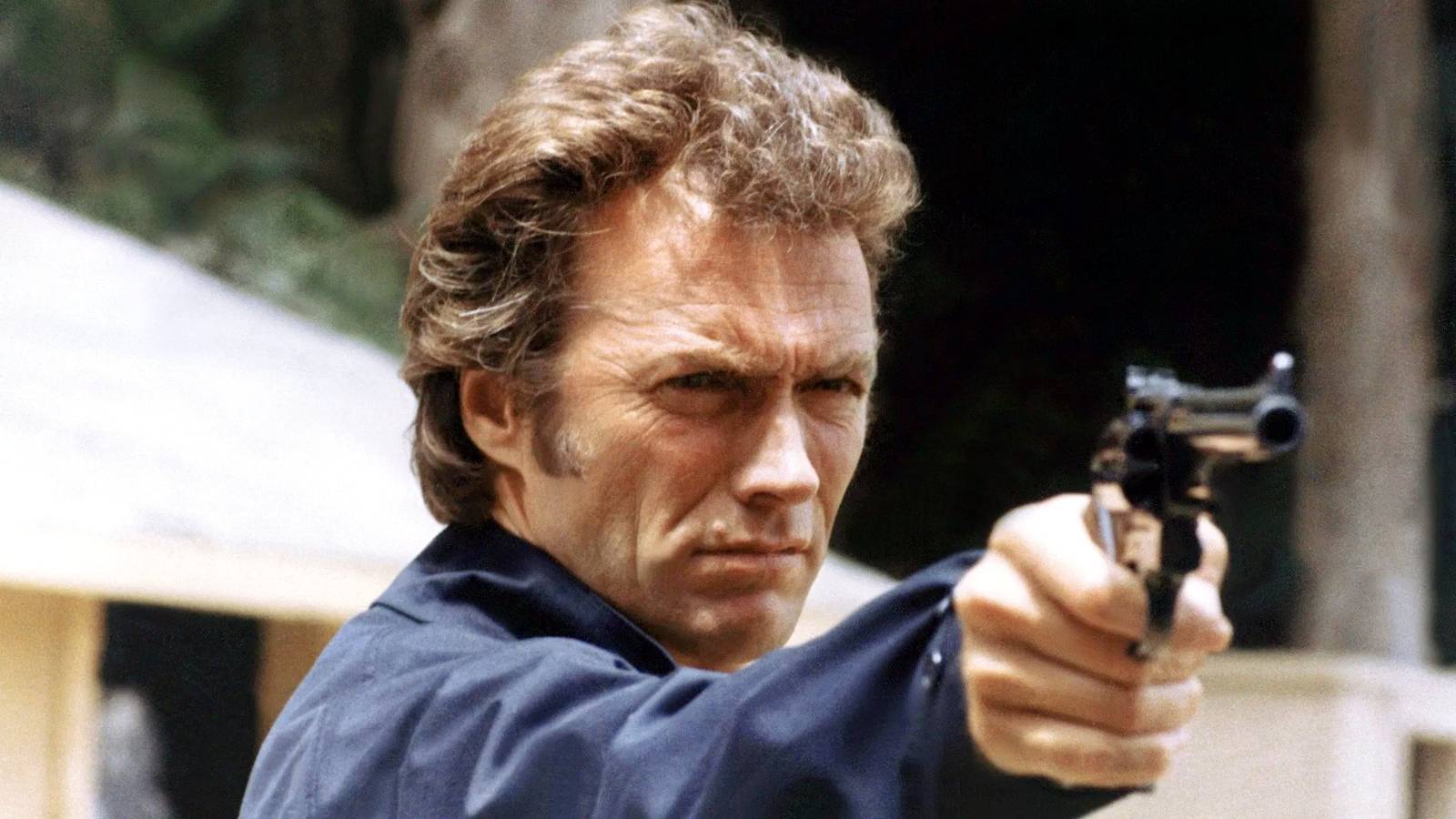

Clint Eastwood’s Dollars trilogy is one of the few trilogies where every movie is a classic. Westerns weren’t in great shape by the time the 1960s arrived. Younger audiences were drawn to more contemporary stories, while the genre had been overexposed thanks to multiple TV shows like Gunsmoke and Rawhide.
Clint Eastwood himself spent a productive 8 years on the latter show, though his goody two-shoes character left him yearning to play something darker. While he couldn’t have known it at the time, his involvement with Sergio Leone’s Dollars trilogy would not only reinvent the ailing Western genre, it would propel him to movie icon status.
The first entry A Fistful of Dollars ripped off Akira Kurosawa’s Yojimbo, and despite its low budget, it was so fresh and creative it practically invented the Spaghetti Western genre. Eastwood didn’t have much expectation that the film would lead him anywhere, and thought that if it sucked, the film wouldn’t get much play outside Italy anyway.
Every Movie In Clint Eastwood’s Dollars Trilogy Is A Classic

Eastwood’s Man with No Name was instantly captivating to audiences the world over, and the series established Clint’s strong, silent persona. Leone didn’t set out to make a trilogy, but the success of A Fistful of Dollars led to demand for a sequel, and the filmmaker was only happy to comply.
The thing with a lot of film trilogies is that at least one entry tends to be disappointing. The Godfather has two perfect films, but the third entry is a famous disappointment, while The Dark Knight Rises is a solid but flawed trilogy capper. Leone’s Dollars trilogy is the extremely rare case where each film is great in its own right.
|
The Dollars Trilogy |
Release Year |
|---|---|
|
A Fistful of Dollars |
1964 |
|
For a Few Dollars More |
1965 |
|
The Good, the Bad and the Ugly |
1966 |
A Fistful of Dollars is a little scrappy thanks to its small budget, but it’s also a stylish and exciting Western tale. Eastwood is the epitome of cool, the film gloriously breaks the supposed rules of the genre while Leone makes the movie’s bleak setting look beautiful.
It’s thin in terms of characterization, but that also gives it a welcome leanness. It could be argued that For a Few Dollars More is the best of the trio, with Leone refining what worked the first time around. This sequel adds a more emotional story, thanks to the introduction of Lee Van Cleef’s vengeance-seeking Colonel Mortimer.
The film becomes an unconventional buddy movie as Mortimer teams with Eastwood’s bounty hunter to take down a famed outlaw. The action is slick, and despite its two-hour-plus runtime, this 1965 Western never sags. There’s also a sense of Leone experimenting with his own style, now that he has a decent budget to work with.
Of course, The Good, the Bad and the Ugly is the most acclaimed of the bunch. Right from the opening titles where Ennio Morricone’s iconic score plays to the climactic cemetery standoff, it’s pure cinema. It’s a violent epic where three amoral men search for gold against the backdrop of the Civil War.
The third and final installment saw Leone fully in command of his craft. The framing and compositions are incredible, while Eli Wallach steals every scene as the deceitful Tuco. If anybody needs a place to begin with Spaghetti Westerns, The Good, the Bad and the Ugly is the best starting point.
Clint Eastwood Could Have Been Dropped From The Good, The Bad, And The Ugly

As both star and director, Eastwood is known for economy. He’s famous for often only doing one take of a scene – or printing a rehearsal if he feels it works. This could be a consequence of his TV days, where speed and efficiency were essential to getting things done on schedule.
That’s why Clint grew impatient with what he saw as Leone’s indulgent way of filming the Dollars movies. The Italian director needed time to set up his shots, and his leading man grew increasingly frustrated with waiting around. This, in turn, made him reluctant to sign on for a third outing.
According to The Good, the Bad and the Ugly co-writer Luciano Vincenzoni, Leone was so angered at Eastwood’s stance that he considered replacing him with Charles Bronson (via Fistful of Leone). This recasting would make sense, considering Bronson was in contention for A Fistful of Dollars previously.
Leone also considered Steve McQueen as Blondie in The Good, the Bad and the Ugly.
Great as Bronson is, it would have been a real disappointment had Eastwood not returned for The Good, the Bad and the Ugly. The star didn’t come cheap either; Eastwood signed on for a reported $250,000 fee and 10% of the movie’s gross in America. Bronson and Leone later collaborated on Once Upon a Time in the West.
The Dollars Series Is The Only Trilogy Where Each Entry Improves On The Last

Not only is the Dollars series a near-perfect trilogy, it’s one of the only examples where each movie improves on the last. There is a significant leap in terms of craft and ambition between movies one and two, and then from two to three. The finale is a true epic, whereas A Fistful of Dollars is relatively small-scale.
Quentin Tarantino did a more elegant job articulating this when guesting on the Club Random Podcast. Tarantino claimed the Dollars franchise “does what no other trilogy has ever been able to do” since each one builds on the other and adds more depth and craft.
The first movie is terrific, but the second movie is so great and takes the whole idea, For a Few Dollars More, is so great and takes the whole idea to such a bigger canvas that it obliterates the first one. And then the third one, The Good, the Bad and the Ugly, does the same thing to the second one, and that’s kind of what never happens. You’ll see this big jump from the first to the second, and they don’t really land the third one.
A good contrast with the Dollars trilogy would be Clint’s other major franchise, Dirty Harry. The first movie is a classic, the second film, Magnum Force, is decent, while The Enforcer plays like a standard 1970s TV procedural with more violence. That said, Eastwood’s fourth entry, Sudden Impact, makes a good companion to the original.
Source: Fistful of Leone, Club Random Podcast
