

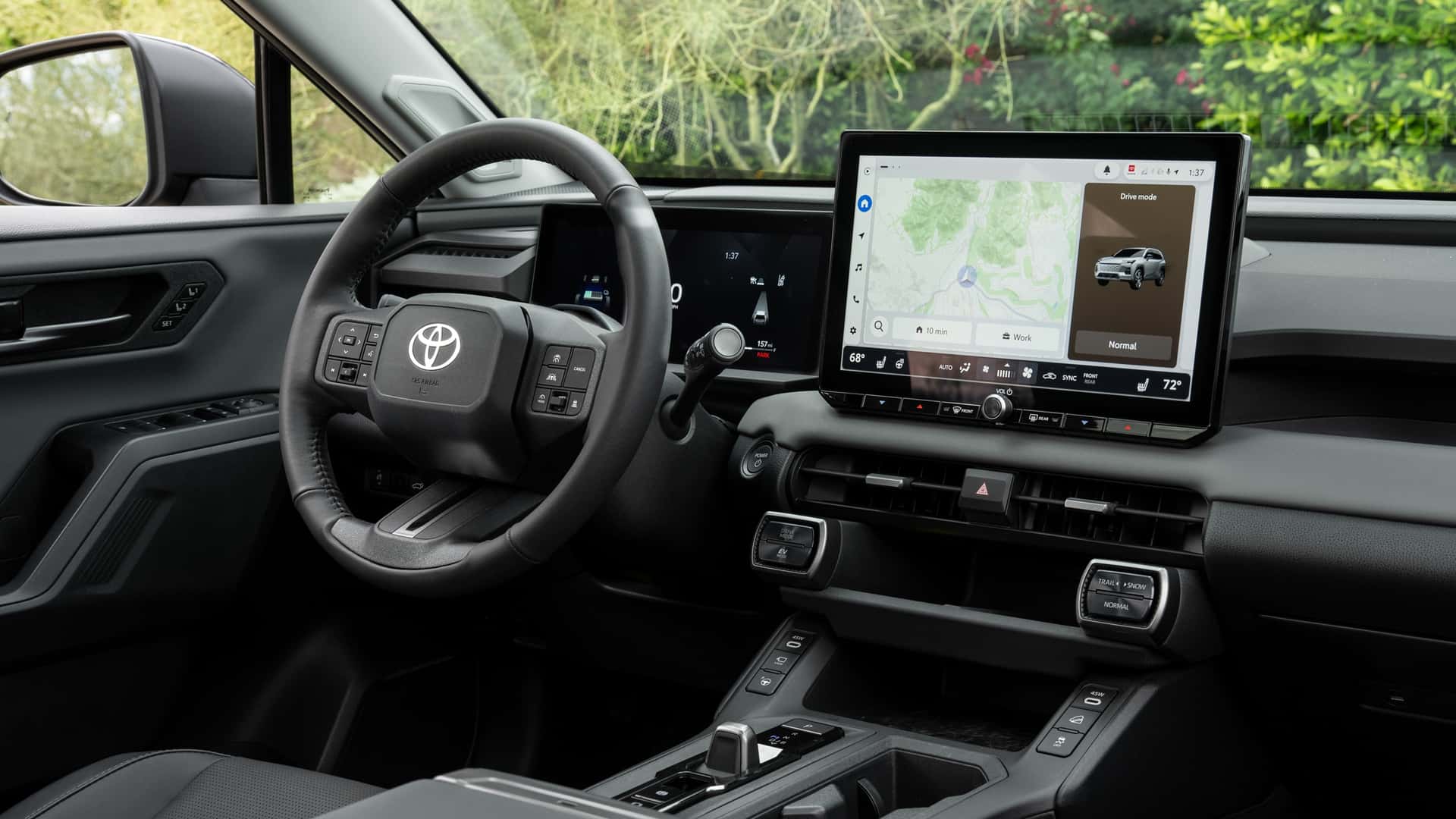

- Toyota could add buttons back to its best-selling SUV if customers demand them.
- The sixth-generation Toyota RAV4 launched with a redesigned cabin and fewer buttons.
- Toyota originally designed the RAV4 with all the interior controls accessible through the display.
Like most modern cars, Toyota ditched as many buttons and switches as it could when it designed the sixth-generation RAV4. The automaker moved functions like fan speed to the screen while keeping physical controls for temperature and volume, but Toyota could add back more buttons if customers demand it.
In an interview with Australia’s Drive, Yoshinori Futonagane, the RAV4’s chief engineer, revealed that the automaker is evaluating consumer responses to the SUV’s new cabin. He also admitted that, within the automaker, “it’s an open item at the moment” whether it will “have to reinstate physical switches for some things.”
“If necessary, yes, we will,” he told the publication.
Toyota originally designed the RAV4 with all its key interior controls only accessible through the screen. The automaker wanted to have the fewest physical switches in the cabin, which caused “a lot of drama” as the team worked to determine which would remain physical and which would become digital.

Photo by: Toyota
The Demand For Buttons Grows
In the last few years, consumers have been begging automakers to put physical buttons back into cars. Some are listening, like Volkswagen, which has faced fierce backlash to its use of capacitive controls and switches.
Even consumers in China want buttons. Futonagane-san told Drive that Toyota tried to put as many controls as possible in the screen, but consumers in the Asian country “didn’t want it. They wanted knobs and switches.” So, the automaker is beginning to add physical switches to other cars it offers there.
Kia, Audi, and others have all committed to keeping buttons. Mazda, famous for its rotary-controlled infotainment display, went in the opposite direction with its new CX-5. The automaker eliminated nearly every button in the cabin, preferring that drivers use voice and steering-wheel-mounted controls.
30
Source: Toyota
Motor1’s Take: Automakers might want to save money by eliminating as many buttons as possible inside today’s cars, but they know consumers are sensitive to those changes. While the RAV4 might lack all the controls a buyer might want, if enough people demand it, Toyota might listen.
