
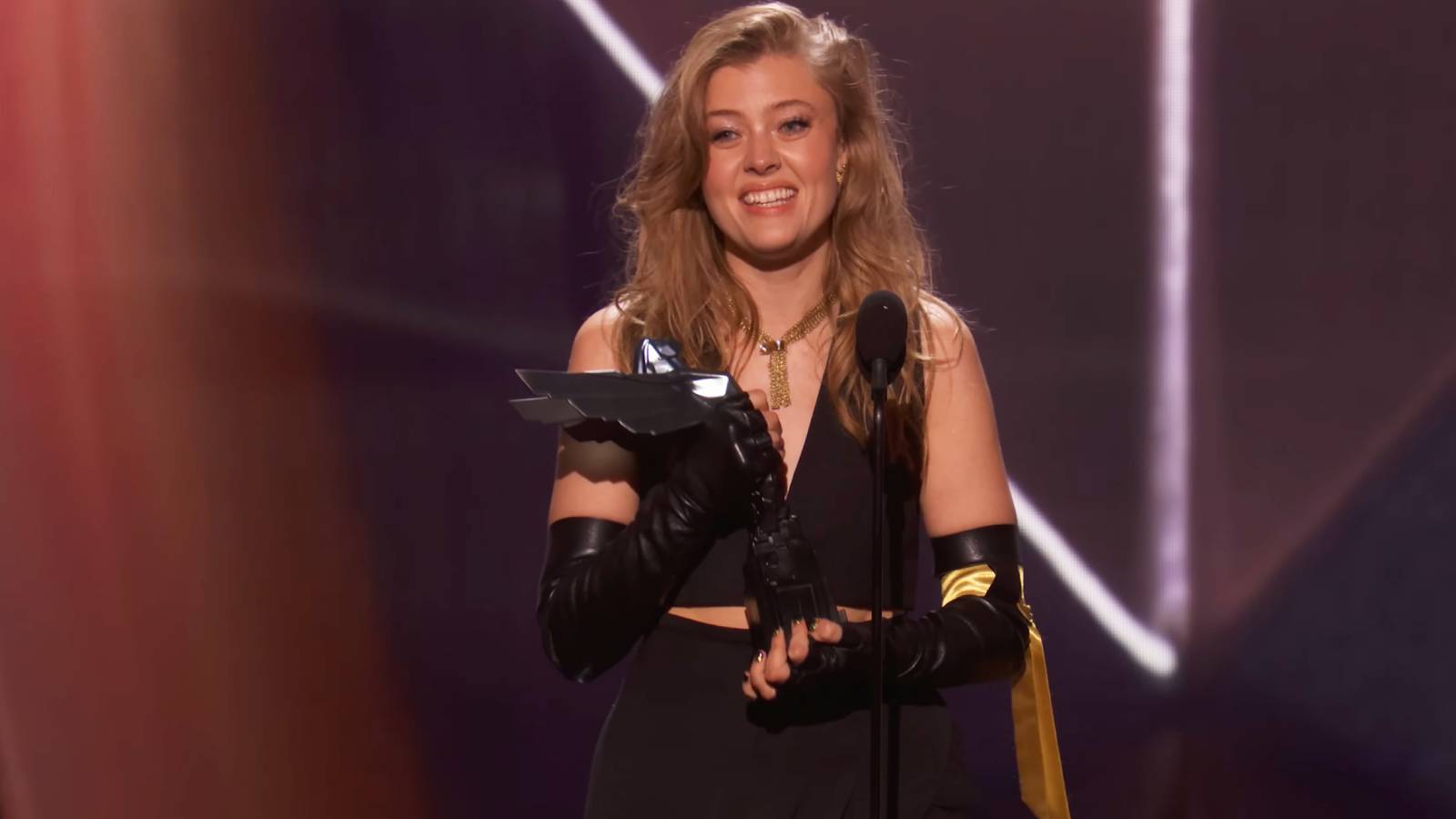

Last night, I watched all three-and-a-half hours of 2025’s The Game Awards, keeping track of all the winners and taking note of all the new game announcements that piqued my interest. But when voice actor Jennifer English took the stage to accept the Best Performance award for her role in Clair Obscur: Expedition 33, I was shocked. No signs flashed telling her to “PLEASE WRAP IT UP.” No music started blasting in an attempt to “play her off” the stage. By the time Clair Obscur developers from Sandfall Interactive took the stage to accept their Game of the Year Award a few hours later, I no longer felt like I was watching The Game Awards. I felt like I was watching a real awards show.
The last few years of TGA have had their share of rough moments. In 2022, Kratos actor Christopher Judd gave a rambling, eight-minute speech after winning Best Performance. Later that night, a stage crasher mysteriously managed to walk onto the stage with the creators of Elden Ring, making a bizarre statement about Bill Clinton while the team accepted their Game of the Year award. The entire ordeal made the show feel like amateur hour, and raised questions about the lack of security at the event.
The next year, I was watching eagerly as voice actor Neil Newbon accepted his Game Award for Best Performance as Astarion in Baldur’s Gate 3. It was clear the actor was touched not only by the win, but by the fan response to his character. As he tearfully gave a heartfelt acceptance speech, a sign lit up in the back of the theater, reading “PLEASE WRAP IT UP.” Seconds later, the show’s producers started up some music, which Newbon had to shout over to finish his speech. It was clear he had more to say, and watching him be rushed through his acceptance speech was genuinely uncomfortable.
It was clear that Game Awards creator Geoff Keighley wanted to avoid another rambling Judd-esque monologue. But his solution — avoiding overly long acceptance speeches by giving winners barely a minute to speak — was arguably worse than the problem it was meant to address. 2024’s show saw Keighley announce the winners of multiple categories as fast as he could, not allowing many of them to take the stage. The whole show felt like a three-hour commercial, punctuated by occasional one-minute award breaks.
But 2025’s show felt genuinely magical. “PLEASE WRAP IT UP” signs were nowhere to be seen, and winners were given ample time to accept the awards they had earned. The show was well-produced, with several stunt-like performances preceding game announcements, including a group of actors dressed like peasants being lifted into the air on wires before the unsettling debut trailer for Larian Studios’ upcoming Divinity. TGA 2025’s “halftime show” equivalent was a nostalgia-tickling performance by none other than Evanescence, promoting Season 2 of Netflix’s Devil May Cry anime. Nobody crashed the stage. Geoff Keighley wore Louboutins instead of sneakers. Miss Piggy made not one, but two appearances.

But what really made 2025’s show feel “legit” wasn’t the Muppet cameo or the on-stage stunt work or Geoff’s fancy shoes. It was the focus on games (and those who create them) combined with some genuinely exciting announcements, including a peek at Leon’s role in Resident Evil Requiem, the surprise reveal of a new shooter created by former Respawn devs, a look at the incredible casting choices for the Street Fighter movie, and the announcement of a new Mega Man game, to name a few. Sure, there were celebrity cameos, but they weren’t given more time to speak than the actual award winners.
Now, I’m not saying the show was perfect. Keighley once again rapid-fire announced winners for multiple categories with the speed and passion of an auctioneer, and important categories like Best Indie Game were inexplicably relegated to the 30-minute pre-show, rather than being a part of the main event. But overall, this year’s Game Awards finally lived up to its nickname as “the Oscars of gaming,” and the show actually felt like the love letter to video games that it’s meant to be.
Yes, it was a three-and-a-half-hour commercial. But it was a good three-and-a-half-hour commercial, and Keighley seems to have finally realized that the formula for a great gaming awards show has nothing to do with how many Hollywood celebrities you can get on the stage, and everything to do with showing genuine appreciation for incredible games, and the incredible people who bring them to life.
