
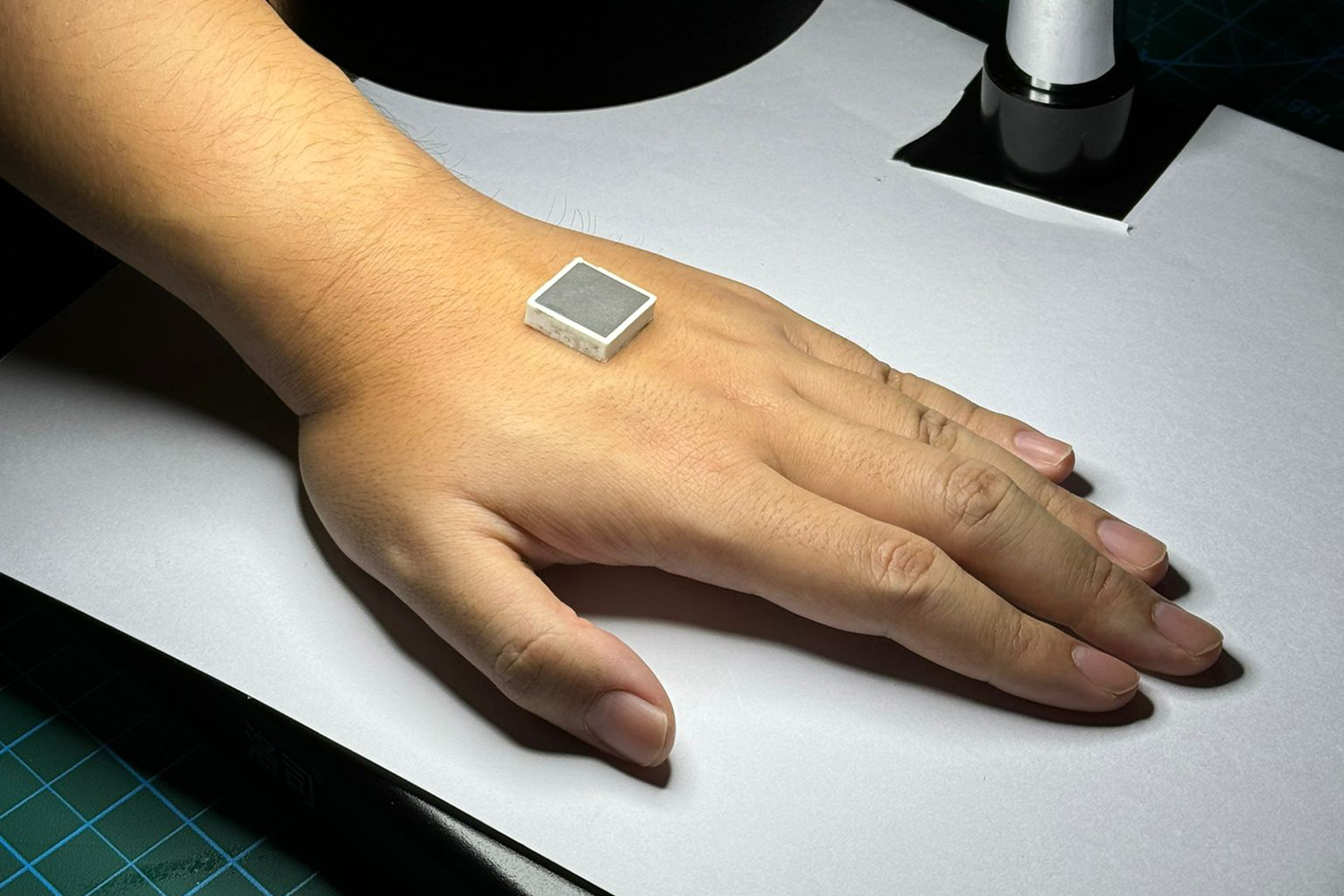


What if ultrasound imaging is no longer confined to hospitals? Patients with chronic conditions, such as hypertension and heart failure, could be monitored continuously in real-time at home or on the move, giving health care practitioners ongoing clinical insights instead of the occasional snapshots — a scan here and a check-up there. This shift from reactive, hospital-based care to preventative, community and home-based care could enable earlier detection and timely intervention, and truly personalized care.
Bringing this vision to reality, the Singapore-MIT Alliance for Research and Technology (SMART), MIT’s research enterprise in Singapore, has launched a new collaborative research project: Wearable Imaging for Transforming Elderly Care (WITEC).
WITEC marks a pioneering effort in wearable technology, medical imaging, research, and materials science. It will be dedicated to foundational research and development of the world’s first wearable ultrasound imaging system capable of 48-hour intermittent cardiovascular imaging for continuous and real-time monitoring and diagnosis of chronic conditions such as hypertension and heart failure.
This multi-million dollar, multi-year research program, supported by the National Research Foundation (NRF) Singapore under its Campus for Research Excellence and Technological Enterprise program, brings together top researchers and expertise from MIT, Nanyang Technological University (NTU Singapore), and the National University of Singapore (NUS). Tan Tock Seng Hospital (TTSH) is WITEC’s clinical collaborator and will conduct patient trials to validate long-term heart imaging for chronic cardiovascular disease management.
“Addressing society’s most pressing challenges requires innovative, interdisciplinary thinking. Building on SMART’s long legacy in Singapore as a hub for research and innovation, WITEC will harness interdisciplinary expertise — from MIT and leading institutions in Singapore — to advance transformative research that creates real-world impact and benefits Singapore, the U.S., and societies all over. This is the kind of collaborative research that not only pushes the boundaries of knowledge, but also redefines what is possible for the future of health care,” says Bruce Tidor, chief executive officer and interim director of SMART, who is also an MIT professor of biological engineering and electrical engineering and computer science.
Industry-leading precision equipment and capabilities
To support this work, WITEC’s laboratory is equipped with advanced tools, including Southeast Asia’s first sub-micrometer 3D printer and the latest Verasonics Vantage NXT 256 ultrasonic imaging system, which is the first unit of its kind in Singapore.
Unlike conventional 3D printers that operate at millimeter or micrometer scales, WITEC’s 3D printer can achieve sub‑micrometer resolution, allowing components to be fabricated at the level of single cells or tissue structures. With this capability, WITEC researchers can prototype bioadhesive materials and device interfaces with unprecedented accuracy — essential to ensuring skin‑safe adhesion and stable, long‑term imaging quality.
Complementing this is the latest Verasonics ultrasonic imaging system. Equipped with a new transducer adapter and supporting a significantly larger number of probe control channels than existing systems, it gives researchers the freedom to test highly customized imaging methods. This allows more complex beamforming, higher‑resolution image capture, and integration with AI‑based diagnostic models — opening the door to long‑duration, real‑time cardiovascular imaging not possible with standard hospital equipment.
Together, these technologies allow WITEC to accelerate the design, prototyping, and testing of its wearable ultrasound imaging system, and to demonstrate imaging quality on phantoms and healthy subjects.
Transforming chronic disease care through wearable innovation
Chronic diseases are rising rapidly in Singapore and globally, especially among the aging population and individuals with multiple long-term conditions. This trend highlights the urgent need for effective home-based care and easy-to-use monitoring tools that go beyond basic wellness tracking.
Current consumer wearables, such as smartwatches and fitness bands, offer limited physiological data like heart rate or step count. While useful for general health, they lack the depth needed to support chronic disease management. Traditional ultrasound systems, although clinically powerful, are bulky, operator-dependent, can only be deployed episodically within the hospitals, and are limited to snapshots in time, making them unsuitable for long-term, everyday use.
WITEC aims to bridge this gap with its wearable ultrasound imaging system that uses bioadhesive technology to enable up to 48 hours of uninterrupted imaging. Combined with AI-enhanced diagnostics, the innovation is aimed at supporting early detection, home-based pre-diagnosis, and continuous monitoring of chronic diseases.
Beyond improving patient outcomes, this innovation could help ease labor shortages by freeing up ultrasound operators, nurses, and doctors to focus on more complex care, while reducing demand for hospital beds and resources. By shifting monitoring to homes and communities, WITEC’s technology will enable patient self-management and timely intervention, potentially lowering health-care costs and alleviating the increasing financial and manpower pressures of an aging population.
Driving innovation through interdisciplinary collaboration
WITEC is led by the following co-lead principal investigators: Xuanhe Zhao, professor of mechanical engineering and professor of civil and environmental engineering at MIT; Joseph Sung, senior vice president of health and life sciences at NTU Singapore and dean of the Lee Kong Chian School of Medicine (LKCMedicine); Cher Heng Tan, assistant dean of clinical research at LKCMedicine; Chwee Teck Lim, NUS Society Professor of Biomedical Engineering at NUS and director of the Institute for Health Innovation and Technology at NUS; and Xiaodong Chen, distinguished university professor at the School of Materials Science and Engineering within NTU.
“We’re extremely proud to bring together an exceptional team of researchers from Singapore and the U.S. to pioneer core technologies that will make wearable ultrasound imaging a reality. This endeavor combines deep expertise in materials science, data science, AI diagnostics, biomedical engineering, and clinical medicine. Our phased approach will accelerate translation into a fully wearable platform that reshapes how chronic diseases are monitored, diagnosed and managed,” says Zhao, who serves as a co-lead PI of WITEC.
Research roadmap with broad impact across health care, science, industry, and economy
Bringing together leading experts across interdisciplinary fields, WITEC will advance foundational work in soft materials, transducers, microelectronics, data science and AI diagnostics, clinical medicine, and biomedical engineering. As a deep-tech R&D group, its breakthroughs will have the potential to drive innovation in health-care technology and manufacturing, diagnostics, wearable ultrasonic imaging, metamaterials, diagnostics, and AI-powered health analytics. WITEC’s work is also expected to accelerate growth in high-value jobs across research, engineering, clinical validation, and health-care services, and attract strategic investments that foster biomedical innovation and industry partnerships in Singapore, the United States, and beyond.
“Chronic diseases present significant challenges for patients, families, and health-care systems, and with aging populations such as Singapore, those challenges will only grow without new solutions. Our research into a wearable ultrasound imaging system aims to transform daily care for those living with cardiovascular and other chronic conditions — providing clinicians with richer, continuous insights to guide treatment, while giving patients greater confidence and control over their own health. WITEC’s pioneering work marks an important step toward shifting care from episodic, hospital-based interventions to more proactive, everyday management in the community,” says Sung, who serves as co‑lead PI of WITEC.
Led by Violet Hoon, senior consultant at TTSH, clinical trials are expected to commence this year to validate long-term heart monitoring in the management of chronic cardiovascular disease. Over the next three years, WITEC aims to develop a fully integrated platform capable of 48-hour intermittent imaging through innovations in bioadhesive couplants, nanostructured metamaterials, and ultrasonic transducers.
As MIT’s research enterprise in Singapore, SMART is committed to advancing breakthrough technologies that address pressing global challenges. WITEC adds to SMART’s existing research endeavors that foster a rich exchange of ideas through collaboration with leading researchers and academics from the United States, Singapore, and around the world in key areas such as antimicrobial resistance, cell therapy development, precision agriculture, AI, and 3D-sensing technologies.
