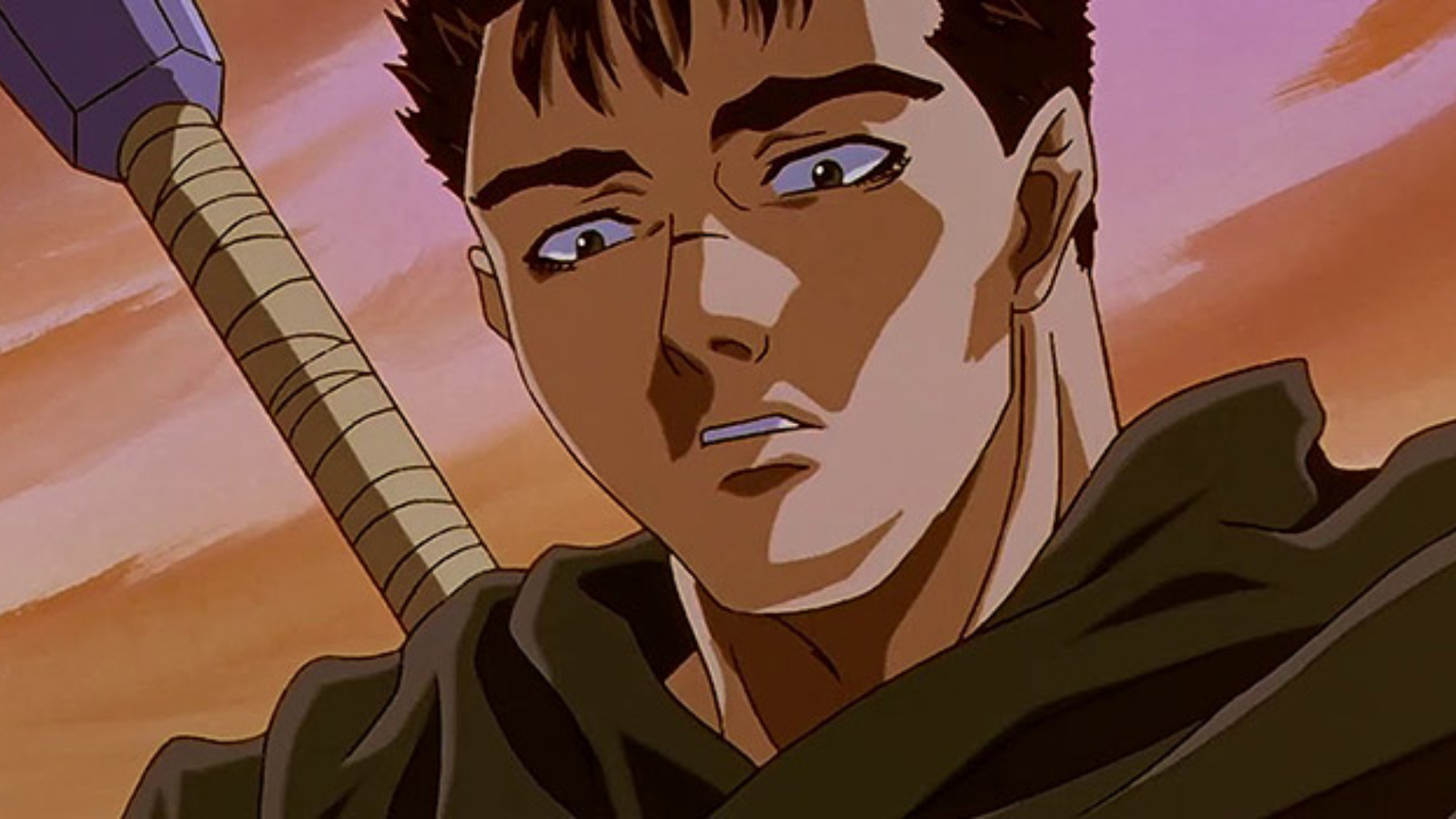

The 1997 Berserk anime holds a sacred place in anime history, especially for fans who discovered the series long before dark fantasy became mainstream. Its haunting atmosphere, tragic characters, and Ashbringer-style medieval grit made it stand out in an era dominated by colorful shōnen shows. But as much as longtime fans treasure it, the series does not entirely withstand modern scrutiny.
With the manga widely considered one of the greatest fantasy epics of all time, expectations for Berserk’s adaptations have always been sky-high. Unfortunately, even the most iconic version, the beloved 1997 anime, struggles to capture the manga’s scale, nuance, and worldbuilding. While it succeeds emotionally in many scenes, time has exposed structural flaws and missing elements that make it feel more like a relic than a definitive take.
Berserk 1997 Leaves Out Critical Story and Character Elements

One of the biggest issues with the 1997 Berserk adaptation is the way it starts and ends. Its opening episode takes a non-canon detour, offering a grim, atmospheric look at Guts but completely sidestepping the manga’s intended introduction. This creates a tonal mismatch that can confuse new viewers unfamiliar with the broader lore.
Worse, the anime abruptly stops after the Eclipse, arguably the series’ darkest turning point, without exploring the aftermath that defines Guts’ entire journey. Ending there robs viewers of crucial emotional resolution and removes the story’s larger thematic arc. Instead of feeling tragically complete, the series feels cut short right when Berserk truly begins.
Major omissions also weaken the adaptation. Characters like Puck, who brings levity and humanity to the manga, never appear, leaving the story heavier and less balanced. The absence of key antagonists like Wyld reduces tension, while the missing Skull Knight eliminates one of the series’ most mysterious and essential figures. These gaps flatten the world and diminish the mythic scope the manga is known for.
Bererk 1997’s Technical Limitations Are Impossible to Ignore Today

While ’90s anime often relies on static frames, Berserk uses them so frequently that entire sequences feel like moving storyboards. The limited budget shows through freeze frames, still backgrounds, and stiff motion that struggle to convey the manga’s brutal, fluid combat. What once felt moody now reads as visually outdated.
The art direction remains impressive, and the soundtrack still hits incredibly hard, but the animation simply cannot support the emotional weight of some of the story’s most intense scenes. Battles lack impact, expressions flatten, and the overall pacing suffers from its production shortcuts. For an action-heavy saga, that is a difficult flaw to overlook.
Modern viewers, accustomed to cinematic animation from studios like Ufotable, may find the 1997 series charming but undeniably aged. And given Berserk’s reputation as a masterpiece, it deserves an adaptation that matches the manga’s beauty, brutality, and emotional power. Fans aer not wrong to cherish the classic, but even nostalgia cannot hide how much potential remains untouched.
In the end, the 1997 Berserk anime is both a cult classic and a missed opportunity. It laid the groundwork for decades of admiration, yet it only scratches the surface of what makes the series extraordinary. For a story as monumental as Berserk, a truly definitive adaptation with modern visuals, complete story coverage, and respect for Miura’s vision still feels long overdue.

- Release Date
-
October 8, 1997
- Directors
-
Naohito Takahashi
- Writers
-
Yasuhiro Imagawa