

Our Experts


Mercey Livingston CNET Contributor
Mercey Livingston is a health and wellness writer and certified Integrative Nutrition Health Coach. She’s written about fitness and wellness for Well+Good, Women’s Health, Business Insider, and Prevention.com among others. When not writing, she enjoys reading and trying out workout classes all over New York City.
Nasha Addarich Martínez Managing Editor
Nasha is a Managing Editor for CNET, overseeing our sleep and wellness verticals. She is a nutrition, mental health, fitness and sleep science enthusiast. Her passion for mindful and holistic practices transcends her personal life and profoundly influences her editorial approach, as she weaves evidence-based insights with practical advice to inspire readers to lead healthier, more balanced lives. Throughout her career, she’s covered various topics including financial services, technology, travel and wellness.
- Sleep Science Coach Certification from The Spencer Institute.
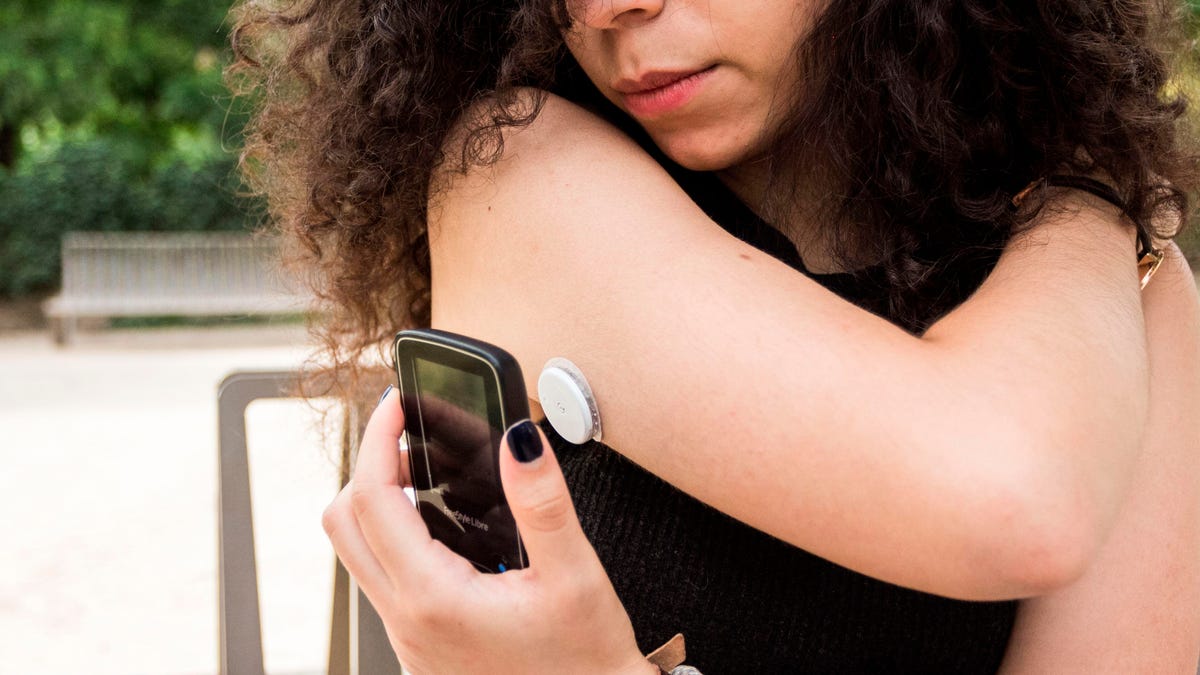
Until recently, the only way to test your glucose was by pricking your finger every day. Now you can monitor it using a continuous glucose monitor, which you wear on your arm. Continuous glucose monitors connect to an app on your smartphone or Apple Watch, letting you easily check your blood sugar throughout the day.
Editor’s note, June 25, 2024: Since this article was first published, Dexcom has launched the G7. This sensor is smaller than the G6 and has an improved alert system, along with a few other differences.
Jump to details
Pros
- Real-time tracking, shareable with up to 10 people
- Customizable alerts
- Discrete sensor
Stelo was the first over-the-counter CGM available in the US when it received FDA approval in 2024. The small sensor sits on the back of your arm and tracks your glucose levels 24/7. You can view your glucose levels within the app, and if you have an Oura ring, it pairs seamlessly. Levels are also viewable within the Oura app. Each sensor lasts up to 15 days, it’s pretty low maintenance, and it’s an easy way to see how your stress, meals and daily habits influence your glucose levels. One pack of two will cost you $99 (lasts about a month), but if you subscribe, that price will drop to $89 a month. The pack comes with everything you need: the sensors, applicator and overpatch to secure the sensor in place.
Jump to details
Pros
- No prescription required
- Real-time glucose tracking
- Painless application
- HSA/FSA eligible
Cons
- No safety alerts for high or low blood sugar levels
- Not intended for insulin-dependent users
Editor’s note, Feb. 4, 2026: Certain FreeStyle Libre 3 and FreeStyle Libre 3 Plus sensors have been recalled due to incorrect glucose readings. To find out whether your sensor is included in the recall and what to do, read the FDA’s recall alert.
Jump to details
Pros
- Affordable and easy to find
- Optional blood sugar alarms
- Small sensor
Cons
- The self-injector can be finicky and cause missplacements
If you want a device that you can set up and don’t have to worry about reinserting for an entire year, Eversense 365 is a great option for diabetes management. A health care provider will insert the sensor and then you place the transmitter above that.
Jump to details
Pros
- Very long sensor life
- Easy-to-use app
- Customizable alerts
Cons
- Requires insertion by a health professional
- Requires frequent calibrations
Lingo is one of the two over-the-counter continous glucose monitors we tested on this list. Like the Stelo, Lingo is worn on the back of the upper arm and you can view your glucose data within the Lingo app, where it’s translated into an easy-to-read chart. The app also includes habit-building challenges and progress tracking, making glucose monitoring feel more like a game than a chore. The Lingo app is available for iPhone and Android users.
Jump to details
Pros
- Affordable entry price (two weeks)
- Gamified, user-friendly app
- Water-resistant design
- Great for habit tracking
Cons
- About 20% of sensors may not last the full 14 days
- No safety alerts for high or low blood sugar levels
The Guardian Connect System is a CGM that can tell you your current glucose readings quickly via a connected app and also lets you easily access trends and data about your blood sugar over time. One feature that stands out with the Guardian is the “predictive” alerts you can get about your sugar. Unlike other CGM systems that alert you when your sugar is already high or low, the Guardian uses technology that predicts when your blood sugar might get high or low before it happens. Another feature that comes with the monitor is the Sugar.IQ diabetes assistant app for diabetes management, which uses your data to help you figure out what diet, exercise and insulin works best for you.
Jump to details
Pros
- Predictive alerts
- Stand-alone system
- Past data up to 24 hours
Cons
- Requires calibration every 12 hours
These monitors provide real-time readings to help you understand how certain foods, activity and medication affect your glucose levels. There are even FDA-approved glucose monitors, such as the Dexcom Stelo Glucose Biosensor System. To help you find the right CGM, we spoke to doctors and researched the most popular models. However, if you have health concerns about your glucose levels, speak to your medical provider first before wearing a glucose monitor.
Best continuous glucose monitors of 2026
Pros
- Real-time tracking, shareable with up to 10 people
- Customizable alerts
- Discrete sensor
Editor’s note, June 25, 2024: Since this article was first published, Dexcom has launched the G7. This sensor is smaller than the G6 and has an improved alert system, along with a few other differences.
“I find continuous glucose monitoring to be a valuable tool in the management of both type 1 and 2 diabetes,” said Dr. Josh Emdur, medical director of SteadyMD. “CGM data provides actionable insight to help patients track their glycemic response to dietary choices and activity levels.”
The Dexcom G6 doesn’t require you to manually scan to get a glucose reading; instead, you get a wireless reading on a dedicated receiver device or on your phone or Apple Watch. The Dexcom G6 CGMs measure glucose levels in the interstitial fluid just under the skin every five minutes, keeping track of your blood sugar level as long as you’re wearing it night and day. You can set a custom range for where you’d like your blood sugar to be, and if it falls into the low or high ranges you set, you will be notified.
“For patients on an insulin pump, the Dexcom G6 may connect with your pump and offer a closed-loop system to turn off your insulin if you are going low. The Dexcom monitor is also approved in pregnancy and offers continuous monitoring that you can see on your phone at all times,” said Dr. Rebecca Fenichel, an endocrinologist at Westmed Medical Group.
Pros
- No prescription required
- Real-time glucose tracking
- Painless application
- HSA/FSA eligible
Cons
- No safety alerts for high or low blood sugar levels
- Not intended for insulin-dependent users
Stelo was the first over-the-counter CGM available in the US when it received FDA approval in 2024. The small sensor sits on the back of your arm and tracks your glucose levels 24/7. You can view your glucose levels within the app, and if you have an Oura ring, it pairs seamlessly. Levels are also viewable within the Oura app. Each sensor lasts up to 15 days, it’s pretty low maintenance, and it’s an easy way to see how your stress, meals and daily habits influence your glucose levels. One pack of two will cost you $99 (lasts about a month), but if you subscribe, that price will drop to $89 a month. The pack comes with everything you need: the sensors, applicator and overpatch to secure the sensor in place.
Over the two weeks I tested the Stelo, I noticed which habits (like taking a walk after dinner) affected my blood sugar the most. I find this tool helpful for those curious about their overall health, and probably not for those with a diabetes diagnosis, as it doesn’t send safety alarms when your glucose levels are too high or too low. If you have a diagnosis and would like to try Stelo, I recommend speaking with your doctor to ensure it will provide the insights and alerts you need. Of the two OTC CGMs on this list (the other one is Lingo), our staff preferred the Stelo CGM.
Pros
- Affordable and easy to find
- Optional blood sugar alarms
- Small sensor
Cons
- The self-injector can be finicky and cause missplacements
Editor’s note, Feb. 4, 2026: Certain FreeStyle Libre 3 and FreeStyle Libre 3 Plus sensors have been recalled due to incorrect glucose readings. To find out whether your sensor is included in the recall and what to do, read the FDA’s recall alert.
The Freestyle Libre 2 was previously on this list and recommended by Dr. Nate Favini. “For people who are interested in deeper insights into their glucose levels, I’ll often recommend the Freestyle Libre for continuous glucose monitoring,” Favini said.
Since then, the device has been updated to the Freestyle Libre 3 Plus (previous models will be discontinued). It essentially works the same way as its predecessor: you place the sensor on your arm and can track your glucose levels throughout the day. The biggest differences between the Freestyle Libre 2 and 3 are that the newest model lasts 15 days (versus 14 days on the 2) and the size of the sensor (the 3 is smaller and thinner). Another new feature of the Libre 3 Plus is that this sensor is compatible with automated insulin delivery systems (also known as pumps), and Abbott has partnerships with most major pump partners.
Pros
- Very long sensor life
- Easy-to-use app
- Customizable alerts
Cons
- Requires insertion by a health professional
- Requires frequent calibrations
If you want a device that you can set up and don’t have to worry about reinserting for an entire year, Eversense 365 is a great option for diabetes management. A health care provider will insert the sensor and then you place the transmitter above that.
Once the sensor is in place, you don’t have to change it out for about 12 months, a long sensor life. The transmitter itself can alert you if your blood sugar is too high or low, and you can also have wireless readings sent to your phone via an app. You can share your blood glucose data from your app with your doctor or anyone else who wants to check your blood sugar readings.
Pros
- Affordable entry price (two weeks)
- Gamified, user-friendly app
- Water-resistant design
- Great for habit tracking
Cons
- About 20% of sensors may not last the full 14 days
- No safety alerts for high or low blood sugar levels
Lingo is one of the two over-the-counter continous glucose monitors we tested on this list. Like the Stelo, Lingo is worn on the back of the upper arm and you can view your glucose data within the Lingo app, where it’s translated into an easy-to-read chart. The app also includes habit-building challenges and progress tracking, making glucose monitoring feel more like a game than a chore. The Lingo app is available for iPhone and Android users.
What I appreciated most was how lightweight and low-maintenance the sensor is. It’s pretty sleek, and you don’t have to worry about carrying a reader. I do recommend buying an overpatch as this sensor doesn’t come with one and the first time I tested I accidentally yanked it off while dressing myself. An overpatch will ensure the device stays securely on your arm.
A single sensor costs $49 (lasts up to 14 days), a two-sensor pack costs $89 (about a month’s supply), and buying in bulk (six sensors for 12 weeks) will save you the most money at $249. Lingo is also the only OTC CGM available in brick-and-mortar stores in the United States.
Pros
- Predictive alerts
- Stand-alone system
- Past data up to 24 hours
Cons
- Requires calibration every 12 hours
The Guardian Connect System is a CGM that can tell you your current glucose readings quickly via a connected app and also lets you easily access trends and data about your blood sugar over time. One feature that stands out with the Guardian is the “predictive” alerts you can get about your sugar. Unlike other CGM systems that alert you when your sugar is already high or low, the Guardian uses technology that predicts when your blood sugar might get high or low before it happens. Another feature that comes with the monitor is the Sugar.IQ diabetes assistant app for diabetes management, which uses your data to help you figure out what diet, exercise and insulin works best for you.
When choosing continuous glucose monitors for this list, we look at which models were previously recommended by doctors. We also aim to include a CGM with a longer-lasting sensor life and models that are popular choices for people with diabetes. The only two sensors tested on this list are Stelo and Lingo, which are also the only two over-the-counter CGMs.
“Continuous glucose monitors offer more intensive monitoring of a diabetic patient’s sugar levels,” Fenichel said. “They are particularly well suited to patients who have to check multiple times a day or to patients who want to get more frequent feedback during the day.”
While anyone can buy a regular blood glucose meter, you’ll need a prescription from your doctor for a CGM system. Doctors may recommend a continuous blood glucose monitoring device for reasons tied to your unique health circumstances and lifestyle, to track your glucose trends and keep on top of your insulin levels, but a CGM device may not work for everyone’s unique diabetes care plan.
CGM devices can also give you and your doctor more information about blood sugar levels than a standard meter — like if your blood sugar begins to drop too low, the device can warn you about your dropping blood glucose levels, “which can be a very helpful feature in helping patients avoid hypoglycemia,” Fenichel said. “They can tell you not only what your current sugar level is but also whether it is on the way up or on the way down.”
Here are some things to take into account when shopping for continuous glucose monitors:
- Scan frequency: Real-time CGMs continuously scan your glucose levels and automatically transmit the data to your phone or receiver, sending regular alerts about your blood sugar. By contrast, with intermittent-scan CGMs, you have to scan them with your phone or receiver to see the data. Some CGMs also measure your glucose more frequently than others.
- Connectivity: Consider whether you want to connect the CGM to your smartphone or to a receiver. If you’re using a phone, look closely at the app and whether it’s easy to use or offers special features.
- Test type: Consider where on your body the CGM’s sensor will be placed, how it’s inserted, and how often it will have to be replaced.
- Insurance coverage: Check whether the CGMs you’re interested in are covered by your insurance, and how much the parts will cost to maintain and replace over time.
Yes, there are two continuous glucose monitors that are available without a prescription. You can also get a regular glucose monitor without a doctor.
Many insurance plans, including Medicaid and Medicare, will cover a continuous glucose monitor, although they may require prior authorization.
The Abbott Freestyle Libre 2 sells for just $103. The cheapest way to get a continuous glucose monitor is to go through your insurance, Medicaid or Medicare; you could potentially get one for free.
It’s recommended to wear your CGM on the back of your upper arm. Some models allow placement on other areas, like the thigh, but always check the manufacturer’s instructions. Avoid placing it on scars or other skin irregularities.
The information contained in this article is for educational and informational purposes only and is not intended as health or medical advice. Always consult a physician or other qualified health provider regarding any questions you may have about a medical condition or health objectives.
