
Below is the list of the current best dual-band Wi-Fi 7 mesh systems. These are hardware without the 6GHz band among those I’ve reviewed.
This list complements the top 5 list of dual-band Wi-Fi 7 routers, and some overlap may exist between the two, as some brands allow for combining multiple specific standalone routers into a single system.
If you want a system with three bands, consider one of the top five “traditional” Wi-Fi 7 mesh systems instead.
Dong’s note: I first published this post on August 28, 2025, and last updated it on November 23, 2025.

Five best dual-band Wi-Fi 7 mesh systems: The practical list
While the lack of the 6GHz band might be a shortcoming, it can also be beneficial. Among other things, this band has a limited range—its range-extending AFC feature is not widely available—and its availability varies globally.
How the 6GHz band is regulated around the world
The 6GHz band has a total width of 1200 MHz, ranging from 5.925 MHz to 7.125 MHz, and is divided into 59 channels of 20 MHz each. These channels are grouped to create “sub-bands,” which also vary from one region to another.
In the U.S., the FCC has designated four sub-bands across the entire 6GHz spectrum, including UNII-5, UNII-6, UNII-7, and UNII-8, for Wi-Fi use, though portions of the band may be reserved for other applications.
The E.U. Commission allows only the UNII-5 equivalent part of the frequency for Wi-Fi use, which is 480 MHz in width from 5925 MHz to 6425 MHz. Some other parts of the world are somewhere in between, with the UNII-5 portion adopted and the rest being considered. In the rest, this band may not even be available for Wi-Fi at all.
Generally, Wi-Fi 6E needs a 160MHz channel to deliver the best performance, and Wi-Fi 7 requires double that, 320MHz. Due to spectrum availability and other reasons, real-world hardware tends to use narrower channels in most cases.
Overall, the use of the 6GHz frequency is complicated and is the main reason a Wi-Fi broadcaster made for one region might not work in another.

The table below shows its current adoption worldwide. The “Considering” portion is generally slated to be finalized eventually, though that varies from one region to another.
| Country | Adopted Spectrum |
|---|---|
| United States | 5925-7125 MHz (entire band including UNII5, UNII-6, UNII-7, and UNII-8) |
| Albania | 5945-6425 MHz (UNII-5) |
| Andorra | 5945-6425 MHz |
| Argentina | 5925-7125 MHz |
| Australia | 5925-6425 MHz |
| Austria | 5945-6425 MHz |
| Azerbaijan | 5925-6425 MHz |
| Bahrain | 5925-6425 MHz |
| Bangladesh | 5925-6425 MHz |
| Belarus | 5945-6425 MHz |
| 5945-6425 MHz | |
| Belgium | 5945-6425 MHz |
| Bosnia and Herzegovina | 5945-6425 MHz |
| Brazil | 5925-7125 MHz |
| Bulgaria | 5945-6425 MHz |
| Burkina Faso | 5945-6425 MHz |
| Canada | 5925-7125 MHz |
| Chile | 5925-6425 MHz |
| Colombia | 5925-7125 MHz |
| Costa Rica | 5925-7125 MHz |
| Croatia | 5945-6425 MHz |
| Cyprus | 5945-6425 MHz |
| Czech Republic | 5945-6425 MHz |
| Denmark | 5945-6425 MHz |
| Dominican Republic | 5925-7125 MHz |
| Egypt | 5925-6425 MHz |
| El Salvador | 5925-7125 MHz |
| Estonia | 5945-6425 MHz |
| European Union | 5945-6425 MHz |
| Faroe Islands | 5945-6425 MHz |
| Finland | 5945-6425 MHz |
| France | 5945-6425 MHz |
| Georgia | 5945-6425 MHz |
| Germany | 5945-6425 MHz |
| Gibraltar | 5945-6425 MHz |
| Greece | 5945-6425 MHz |
| Guatemala | 5925-7125 MHz |
| Honduras | 5925-7125 MHz |
| Hong Kong | 5925-6425 MHz |
| Hungary | 5925-6425 MHz |
| Iceland | 5945-6425 MHz |
| India | 5945-6425 MHz |
| Ireland | 5945-6425 MHz 6425-7125 MHz |
| Isle of Man | 5945-6425 MHz |
| Italy | 5945-6425 MHz |
| Japan | 5925-6425 MHz 6425-7125 MHz |
| Jordan | 5925-6425 MHz |
| Kazakhstan | 5925-7125 MHz |
| Kenya | 5925-6425 MHz |
| Latvia | 5925-6425 MHz |
| Liechtenstein | 5945-6425 MHz |
| Lithuania | 5945-6425 MHz |
| Luxembourg | 5945-6425 MHz |
| Macao | 5945-6425 MHz |
| Macedonia | 5945-6425 MHz |
| Malaysia | 5925-6425 MHz |
| Malta | 5925-6425 MHz |
| Mauritius | 5925-6425 MHz |
| Mexico | 5925-6425 MHz |
| Moldova | 5925-6425 MHz |
| Monaco | 5945-6425 MHz |
| Montenegro | 5945-6425 MHz |
| Morocco | 5925-6425 MHz |
| Namibia | 5925-6425 MHz |
| Netherlands | 5945-6425 MHz 6425-7125 MHz |
| New Zealand | 5925-6425 MHz |
| Norway | 5945-6425 MHz |
| Pakistan | 5945-6425 MHz |
| Paraguay | 5925-6425 MHz |
| Peru | 5925-7125 MHz |
| Philippines | 5925-7125 MHz |
| Poland | 5925-7125 MHz |
| Portugal | 5945-6425 MHz 6425-7125 MHz |
| Qatar | 5925-6425 MHz |
| Romania | 5925-6425 MHz |
| Russian Federation | 5925-6425 MHz |
| San Marino | 5925-6425 MHz |
| Saudi Arabia | 5925-7125 MHz |
| Singapore | 5925-6425 MHz |
| Slovakia | 5925-6425 MHz |
| Slovenia | 5925-6425 MHz |
| South Africa | 5925-6425 MHz |
| South Korea | 5925-7125 MHz |
| Spain | 5945-6425 MHz |
| Sweden | 5945-6425 MHz |
| Switzerland | 5945-6425 MHz |
| Thailand | 5925-6425 MHz |
| Togo | 5925-6425 MHz |
| Tunisia | 5925-6425 MHz |
| Turkey | 5925-6425 MHz |
| Ukraine | 5925-6425 MHz |
| United Arab Emirates | 5925-6425 MHz |
| United Kingdom | 5945-6425 MHz |
| Holy See (Vatican City State) | 5945-6425 MHz |
| Vietnam | 5945-6425 MHz |
Additionally, the 5GHz is still the most popular band, and Wi-Fi 7 has improvements for all bands, including the MLO feature. If you’re in a situation where the 6GHz band is not available or needed, dual-band hardware is a sensible choice since it costs significantly less than that with all three bands.
This list is sorted in the recommended order, with the best routers at the top—the numbers indicate the ranking. By the way, like all Wi-Fi systems, you can always use the primary unit (the router) as a standalone router.
1. ASUS RT-BE86U (BE6800)
The ASUS RT-BE86U features top-tier dual-band hardware specs and is designed as a standalone router. However, thanks to AiMesh support, you can combine it with other AiMesh-ready routers to form a top-tier dual-band Wi-Fi 7 system, especially when used with wired backhaul.
Tips
For optimal performance and features, it’s best to use the same hardware units (routers) when building an AiMesh system, especially one that features Wi-Fi 7 with Wi-Fi backhaul. That’s also the only way to use MLO as the backhaul link.
The RT-BE86U is also one of the top routers that works as a fast mini NAS server.
Alternative routers from ASUS to build a dual-band Wi-Fi 7 mesh system using multiple units. Again, in a wired backhaul setup, you can mix the RT-BE86U with any of them to build a robust system:
Pros
Top-tier dual-band Wi-Fi with MLO support and excellent real-world performance
Tons of valuable features, including AiMesh 2.0, Gaming, Guest Network Pro, and VLAN
One 10Gbps and four 2.5Gbps flexible network ports with Dual-WAN and Link Aggregation support
Universal setting backup and restoration; open source firmware; fanless design
Relatively compact design, comparatively affordable
2. ASUS ZenWiFi BD5 (BE5000)


The ZenWiFi BD5 is available in a 2-pack or 3-pack, though you can also get individual routers to form a system—the hardware units are pre-synced when you get a pack.
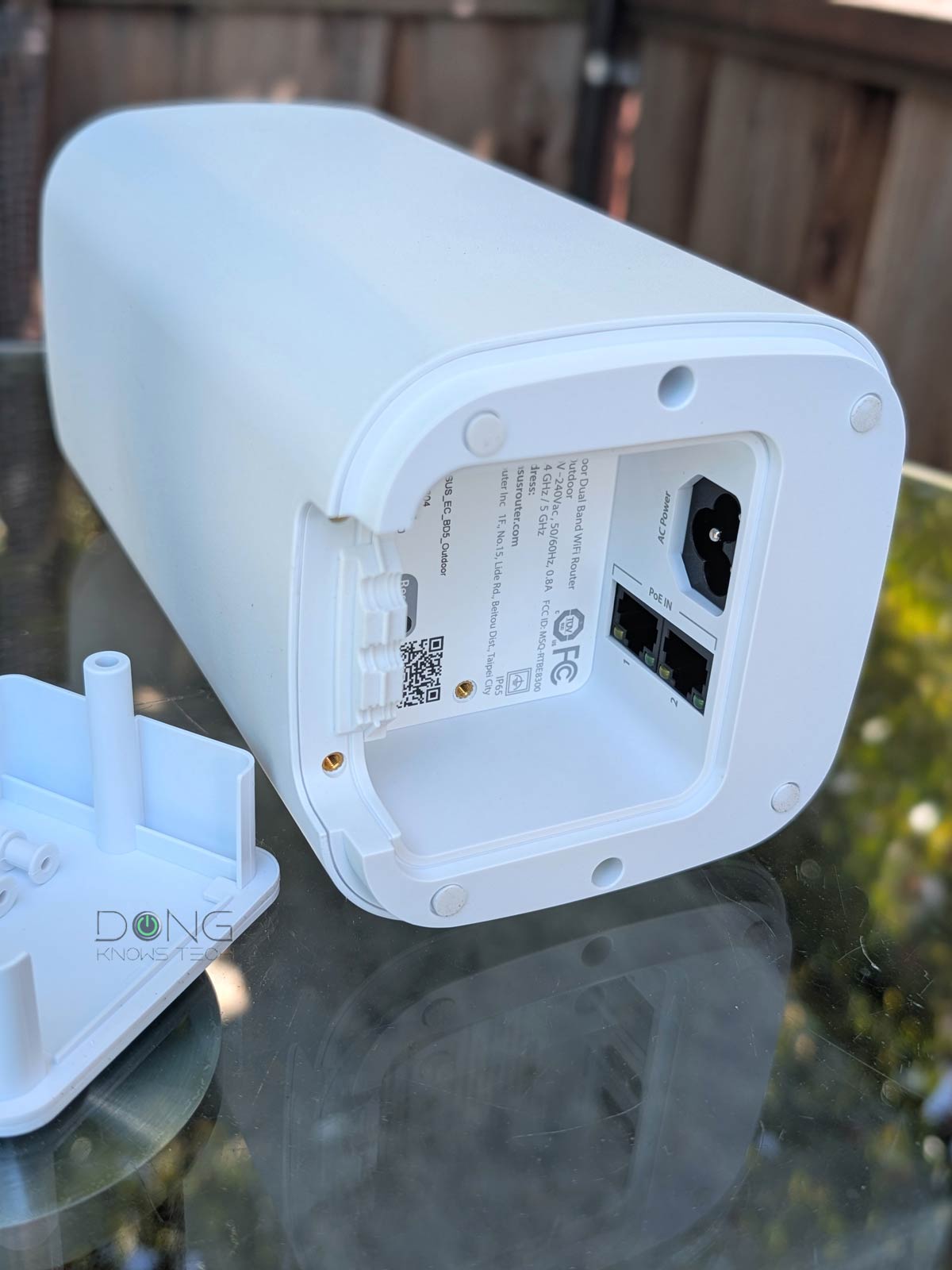
With two auto-sensing 2.5Gbps ports and a PoE Outdoor option, the BD5 is the most flexible dual-band Wi-Fi 7 mesh system to date. It also has strong Gig+ real-world performance in a wireless backhaul setup and actual multi-Gigabit performance in a wired backhaul setup.
Pros
Dual-band Wi-Fi 7 and two 2.5Gbps ports with reliable Gig+ real-world performance and ample coverage
ASUSWRT 5.0 offers numerous customizations and free-for-life high-end features (VPN, Parental Controls, Online Protection, Smart Home Master, etc.).
Robust web user interface and helpful optional mobile app; easy-to-blend-in design
Compact, fanless design with an outdoor option
Cons
Only two network ports with mid-tier bandwidth specs and no 6GHz band
Can’t take setting backup files of other Asus routers
3. ASUS ZenWiFi BD4 (BE3600)

The ZenWiFi BD4 is the lower version of the ZenWiFi BD5 above, in that its Wi-Fi doesn’t support the 240MHz channel width. As a result, in a wireless backhaul setup, its performance will suffer due to the lack of a robust backhaul link. However, since the 240MHz channel width is not supported by any client, in a wired backhaul setup, this dual-band Wi-Fi system will deliver the same experience as the more expensive ZenWiFi BD5 above, making it an excellent deal.
Pros
Dual-band Wi-Fi 7 with two 2.5Gbps ports and reliable performance, affordable
ASUSWRT 5.0 has lots of customizations and free-for-life high-end features (VPN, Parental Controls, Online Protection, Smart Home Master, etc.).
Robust web user interface and helpful optional mobile app; easy-to-blend-in design
Compact with no internal fan
Cons
Only two network ports; bare-minimum Wi-Fi 7 specs
4. TP-Link Deco BE25 (BE5000)
The Deco BE25 is the rival to the ZenWiFi BD5 above. The two share the same Wi-Fi specs and number of ports. Without a web user interface, it has fewer features and is therefore somewhat underwhelming in comparison. However, it makes up for that in the affordability and can deliver Gig+ real-world performance.
Speaking of affordability, you can also consider the lesser but mostly similar Deco BE23.
Note: Since late 2024, TP-Link has been subject to a potential US government ban due to national security concerns.
Pros
Reliable Wi-Fi performance; dual 2.5Gbps ports with excellent wired backhauling
Super affordable for Wi-Fi 7 hardware; standard set of free networking and features
Compact, eye-catching, fanless design; easy to use
Cons
Short range, minimum Wi-Fi 7 specs with matching performance
Security+ and advanced Parental Controls require subscriptions.
TP-Link login account and mobile app required; no web-based management
5. Netgear Orbi 370 series (BE5000)


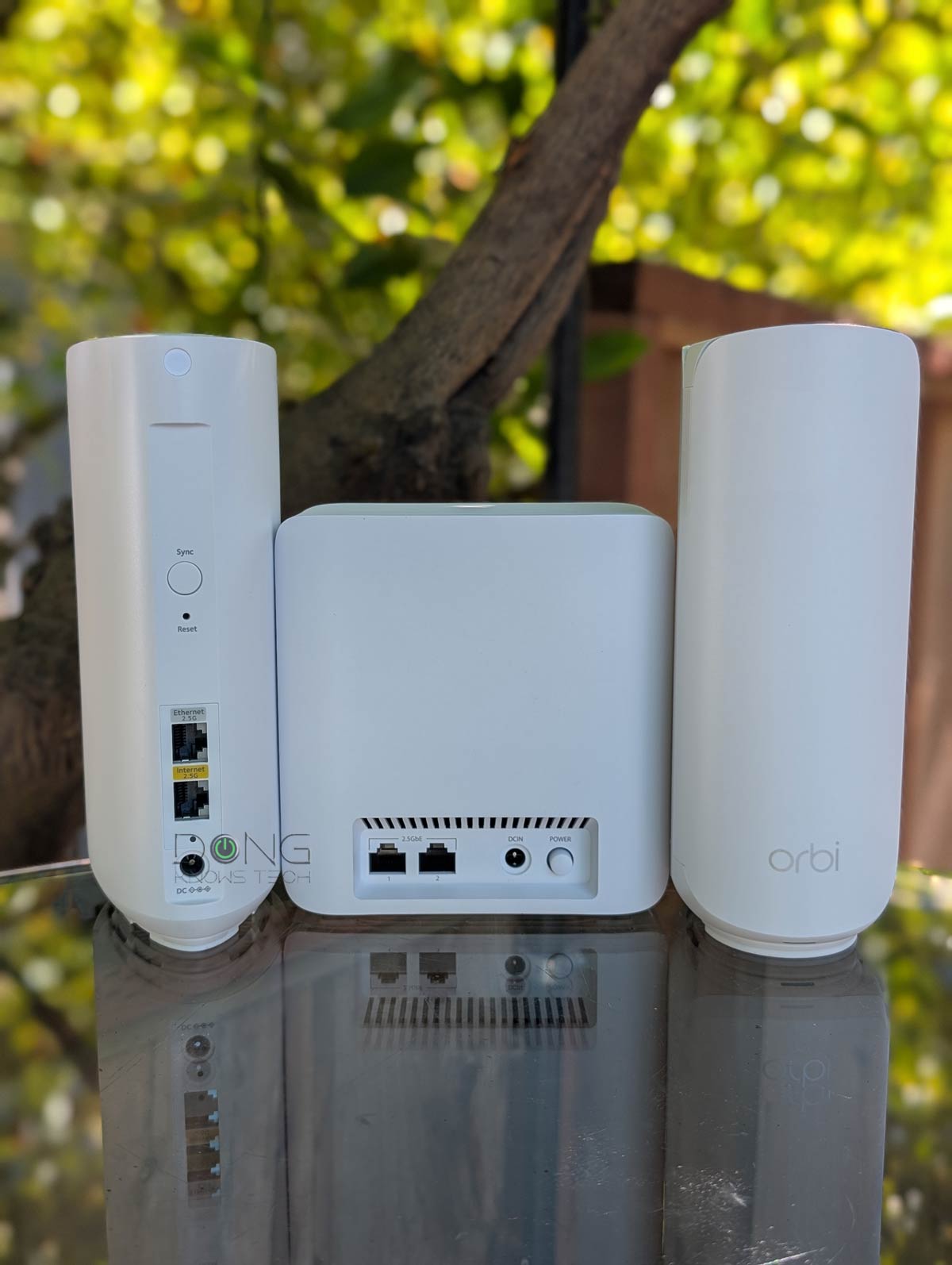
The NETGEAR Orbi 370 series shares similar hardware specs as the ASUS ZenWiFi BD5 and TP-Link Deco BE25 above, but, like all Orbi hardware, it comes with distinctive router and satellite units that can’t work interchangeably. That, plus the fact that there’s only one network port on the satellite, means it’s designed primarily as a wireless system. For that reason, it’s the least flexible hardware on this list, but if you’re looking for a reliable system in a home with modest bandwidth needs, this dual-band Wi-Fi 7 mesh system will work out well.
Pros
Wi-Fi 7 with entry-level Multi-Gig support, with reliable matching performance
Aesthetically pleasing, compact design, runs cool and quiet
Affordable compared to other Wi-Fi 7 Orbi sets
Cons
Web user interface is obscured in favor of the Orbi mobile app; limited in customization and settings
Basic features available in others for free require a monthly subscription.
Expensive compared to competing hardware of similar specs
The final thoughts
Dual-band Wi-Fi 7 mesh hardware is an effective and affordable approach. If your home is wired with network cable, it can deliver multi-Gigabit performance without digging a hole in your wallet.
On the other hand, if you must use them via wireless backhauling, expect Gigabit-class real-world rates at the satellite unit at best. In this case, maybe it’s a better idea to consider a full-band system.