


Car theft in Victoria is reaching its highest levels since 2001, with vehicle-related crimes in the state exceeding the figures of all other Australian states combined.
More than 32,000 cars were stolen in Victoria in 2025, a rise of 96.9 per cent over the past three years. Authorities have attributed the increase to the rapid development and proliferation of key-cloning devices, technology that’s readily accessible online and used to override in-built car security systems.
Victoria Police has gone so far as to say such tech is being used for between 30 and 40 per cent of all car thefts, and new vehicles equipped with push-button starters are particularly vulnerable. Among the most popular vehicles to steal are the Holden Commodore, Subaru WRX, and various Toyota models.
Toyota has recently rolled out countermeasures, like a genuine accessory steering wheel lock, and it’s understood that an updated immobiliser for Toyota vehicles is on the way. But for some owners this isn’t enough, and they’re turning to third-party security providers instead.

There are several brands of aftermarket car security systems available in Australia, but among the most prominent is an immobiliser called IGLA. This is developed and manufactured by European-based company Author Alarm and available via a small network of installers across Australia.
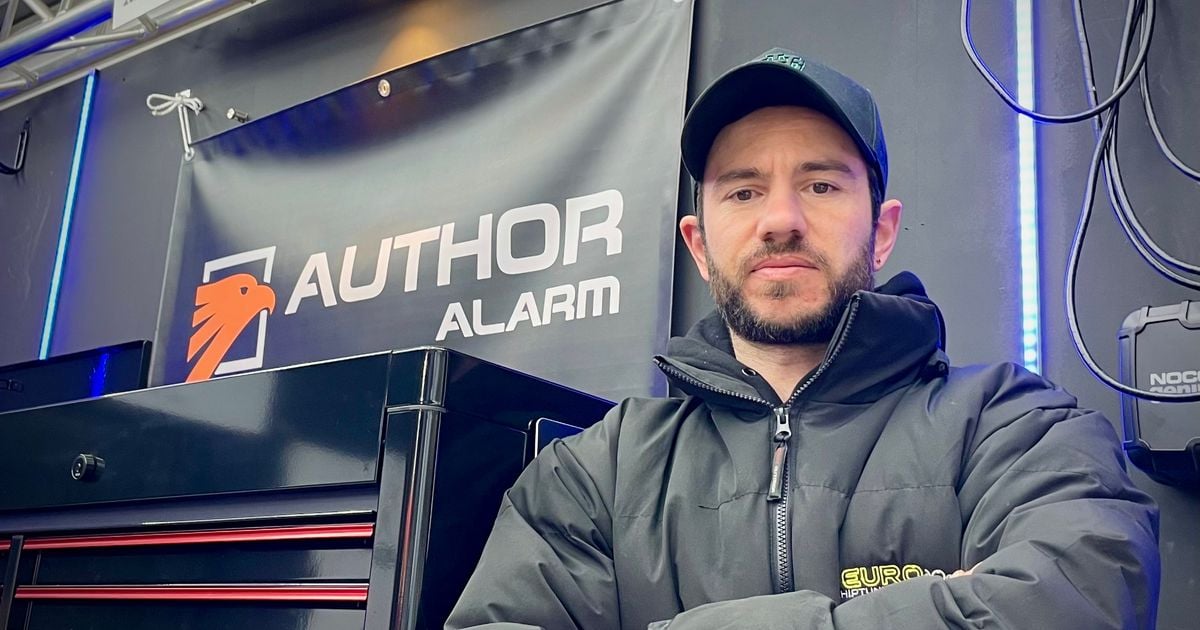
The head of IGLA locally is John Savino, whose business Euro Chiptuning is the brand’s Australian importer and distributor. It’s also one of 16 installers in Australia, and one of eight in Victoria alone.
In light of Victoria’s car-crime crisis, CarExpert sat down with Mr Savino to discuss all things car theft and car security, including low-cost methods to keep your car safe, and when car theft trends could slow down.
Note this is not a sponsored article. This author has paid for Mr Savino’s services on a personal car in recent times.
How has your business changed in the past few years as car-related crime has skyrocketed in Melbourne?
Obviously, with the name of the business, Euro Chiptuning, I was specifically aimed at tuning cars. Since all the thefts have been going on, the security side of it has taken over, so it has changed for sure.
It is surprising, actually. When I first stumbled across IGLA, it was before all this stuff was going on – a couple of months, maybe. I was taking a chance by taking IGLA in, so it took us by surprise.
Believe it or not, I found IGLA on a YouTube video. I’ve always been into car security; I’ve had a car stolen from me in the past, and that’s what got me into doing it. I was doing it as a weekend thing, as a hobby, and then it sort of grew into a passion.
I was watching a YouTube video, and there were some guys in America that were talking about IGLA, so I wanted to try it out.
Everyone that I called [in Australia] had never heard of it, so I ended up calling Author Alarm directly, who surprisingly told me that they were looking for someone in Australia to start bringing the product in. I tried a couple out, and here we are.
There is a network of authorised installers now, at least one in every state, but the majority are in Victoria given what’s been going on.
Which models are coming in for security upgrades most frequently, and what upgrades are most owners opting to install?
Pretty much anything that’s new with a push-button start.
Toyota LandCruiser, obviously, Prado, 86 coupe, followed by the Subaru WRX and the BRZ, even Levorg, the whole lot. A lot of other cars are now coming in too, even Audis and stuff like that.
And then we all know about the Holdens; we’re still protecting them daily.
The majority would go for just a simple PIN-code immobiliser, which does the most work anyway. That’s what’s preventing [thieves] from taking these cars; it’s not preventing damage unfortunately, but it is greatly limiting them from taking cars without a tow truck.
IGLA will actually work on key-start cars as well, so it is an option. We also have an analogue-style PIN-code immobiliser that’s slightly cheaper but does the job for older cars; there are cheap alarms; there are a lot of other things out there that we can offer, and that others can offer too.
Electronic engine immobilisers were mandated for all new cars sold in Australia from 2001, but car thefts are higher than ever. Is the immobiliser technology from automakers keeping up?
That’s a hard question.
Let’s look at the Holdens, for instance. Their technology was made 15 years ago for the VF Commodore, and 10 years ago no-one could crack that system. It’s taken eight years for [criminals] to be able to bypass that, and that tells me that the security was good for its time.
What the issue now is, you’re seeing brand-new cars having their immobilisers defeated. I don’t believe personally that it’s due to the manufacturers not engineering a good enough system; there are a few other things.
It’s the tool companies that are going too far with how they’re allowing these products to bypass security; that’s one thing.
The other thing is that the government is not regulating these tools; anyone’s able to buy them, and that’s ridiculous if you ask me.
You should have to be an auto electrician, a mechanic, a locksmith, or a specialist in the field to be able to own that, but it was never regulated.
Thirdly, the issue is that car manufacturers now have to have a publicly available workshop manual.
Every part of a car has to be documented and put into that workshop manual, and anyone who has an idea of how to access that manual would have an understanding of how to read a wiring diagram and how to read a workshop manual.
Once they know the ins and outs of that security system, it’s very easy to bypass it. That’s an issue. Every car has the same technology in the same location – once they figure one out, they’ve figured them all out.
At a top-line level, what are the most common methods of vehicle theft you’re seeing at the moment?
Key programming tools being used via the OBD [On-Board Diagnostics] port is the main one, followed closely by CAN hacking or CAN injection. They would simply connect to the car’s CAN bus somewhere and use their own tools to send [fake] messages through the car to take it that way.
Key signal boosting was a thing, but it didn’t last long. Because that’s a two-man operation, it faded out quickly once they had other methods. It’s not something we see often anymore.
MORE: Toyota RAV4 stolen via… the headlights?
What’s your opinion on recent announcements from car brands regarding in-house security improvements, like immobiliser upgrades and genuine accessory steering wheel locks?
Again, those factory immobilisers will be documented.
They’ll be listed and available on the internet, so anyone will be able to access that information, easily bypass it, and it’s just going to go in a circle.
It might stop them for a couple of months, but once they’ve figured it out, it’s just going to be a free-for-all again. That’s the downside to publicly available workshop manuals, I suppose.
As for steering locks, they may certainly provide some sort of deterrent, but we’ve seen it so often in videos where they’re just removing them.
These guys have nothing to lose. They don’t care who’s watching or who sees what; they’ll rip out a portable grinder or a hacksaw.
We’ve seen bolt cutters straight through the steering wheel, and then they just slide off the lock. There’s no noise involved with that. Unfortunately, if they come prepared, that’s not going to stop them.
MORE: Toyota is fighting widespread LandCruiser thefts with a club lock
Do you think automakers are doing enough to combat the current crisis?
I honestly think they’re trying with new cars that are coming out. They’re not going to revisit cars that are already out because it’s just too much to deal with.
Again, it’s just going to come down to what information is available on the internet. That’s where a good aftermarket system comes in, because there’s just no information available for it, and we can install it anywhere in the car, so it takes ages just to find it.
We are currently working with General Motors to offer IGLA as an aftermarket option. We’re just waiting on them to finalise some paperwork, but it will be offered as an aftermarket option in Australia.
It won’t be documented in workshop manuals, and it will be installed by an IGLA installer. Hopefully, if it all works well with GM, we’ll then attack some other brands and see how it goes.
GM is the first company mainly because we actually have a couple of installers that are ex-GM engineers. We had our foot in the door there, and GM decided they were happy with what they saw.
NOTE: GM Australia declined to comment on the above.
Do you think the government is doing enough to combat car theft? If not, what more could be done, and when do you think we could see a change for the better?
I don’t think their machete bins did much.
My answer to that is just straight-out no. They’re just not doing anything.
They could start by regulating these tools and requiring a licence to use them and own them. That way, people can be traced back, and authorities can investigate them more easily.
Obviously, there’s always going to be a black market, so things will leak through, but I believe the rate of theft would drop immensely.
We’re a long way away from change, too. I follow a lot of trends overseas so I can understand what’s coming, because [Australia] is always late to the party, and it’s actually not getting better yet.
In the US, for example, the theft rate is still ridiculously high. And they are doing stuff about these tools and all that over there, but it’s just too little too late, unfortunately.
MORE: Victoria Police recover $1 million worth of stolen cars in crackdown on cloned number plates
What are your thoughts on recommendations from the government/police to use cheaper security devices, like steering wheel and OBD port locks?
My thoughts on those are don’t rely on them at all.
I’ve put some videos up online – not that I want to show people how easy they are to remove – but they come off super-easily. I can just pull them off with my hands.
I’ve posted those videos to try and warn people that they’re not safe. I have approached Victoria Police about it, and they’ve just not replied.
It’s a false sense of security, telling people to buy these things that are just not going to work. You see ads for them everywhere.
What are some of the most significant challenges you and other aftermarket immobiliser installers face?
The biggest challenge is keeping the systems we’re offering secure. The more that are out there, the more susceptible it is to being figured out or bypassed.
I can’t speak for other brands, but I know that with our brand and what we do, we try to keep our network small but strong. We all communicate, we all develop new install methods and procedures, and we keep that in our circle so it remains secure.
I’m sure there are other brands doing the same thing, but that is the biggest challenge for us: to make sure it remains secure.
And what about the risk of voiding new-vehicle warranties?
We have spoken to many dealerships, specifically Toyota, because I know a lot of people are worried about losing their Toyota warranty.
[The dealers] have always come back and said that as long as it’s installed by a qualified and licensed installer, it will not void the warranty, so people don’t have to stress about that.
NOTE: CarExpert approached Toyota Australia to confirm the above. A spokesperson stated:
“The fitment of an immobiliser does not automatically void a vehicle’s warranty. However, Toyota is not able to warrant failures directly caused by the fitment of an immobiliser if this is due to poor workmanship,” they said.
“It is important to note that Toyota assesses all warranty claims on a case-by-case basis.”
Among your customers, what is the split between owners wanting to be proactive in protecting their car, and those who want to add security after their stolen car has been recovered?
It depends on the person.
You’ve got the people whose cars are their life, so they’ve come in and had everything put on straight away.
Then you’ve got the others who thought [theft] wasn’t going to happen to them, then it does happen, and so they come in. So we get more than the people whose cars mean the world to them.
Once you go through that process of losing a car, you become paranoid and scared. So they’ll come in and get everything that we can offer them just to make sure it doesn’t happen again.
Dealing with insurance companies, going without a car for a while, all those things take a toll. Especially if you’ve got kids, where you then lose that car for school runs, shopping, everything. They want to make sure that after it happens, it doesn’t happen ever again.
A lot of people take having a car for granted. Even if it’s just a $5000 car, you have no way of getting around without that. A lot of people don’t understand that until something happens.
Beyond aftermarket immobilisers, what can people do on their own to help keep their cars safe, especially if they drive a commonly stolen model?
If they have no choice, my thing would be to just apply every deterrent you can on the cheaper side. A steering lock, an OBD lock, a basic kill switch, all that sort of stuff. And you have to layer it.
The more time that you make [thieves] spend in the car, the harder it is for them. Unfortunately, to add enough layers, you’re probably going to end up equalling the cost of an aftermarket immobiliser anyway.
But all these things have been bypassed already. In recent times especially, [thieves] have found a way around all of those things.
So, on their own, they’re not going to take thieves long to get past, but if you layer them up as much as you possibly can, every second counts. Even a cheap GPS tracker if you’re on a budget, so if they do get past everything else, at least you’ve got some sort of backup to try and track the car.
Just be vigilant. Be aware of where you’re parking, what’s around you, and be prepared in terms of your car’s security. Unfortunately, that’s the world we’re living in at the moment.
MORE: Victoria’s car theft insurance bill exceeds all other states combined
