


- LG Display OLEDs achieve “100% Dimming consistency” certification from UL Solutions
- OLED handles different brightness zones more consistently than backlit ones
- Somehow, AI’s been crowbarred into this, too
LG Display’s OLED panels for TVs and monitors have achieved what the company says is an industry first: they’ve been certified as having “100% dimming consistency” from a third party, UL Solutions. By comparison, LCD panels only achieved a maximum of 83%, with some scoring just 43%.
According to LG Display, OLED is even better than next-gen RGB mini-LED technology. And also, that it’s “the optimal choice in the AI era.”
I don’t doubt that LG’s panels prevailed in this test. But I do have a few questions.
If LG OLED Is the winner, who was the competition?
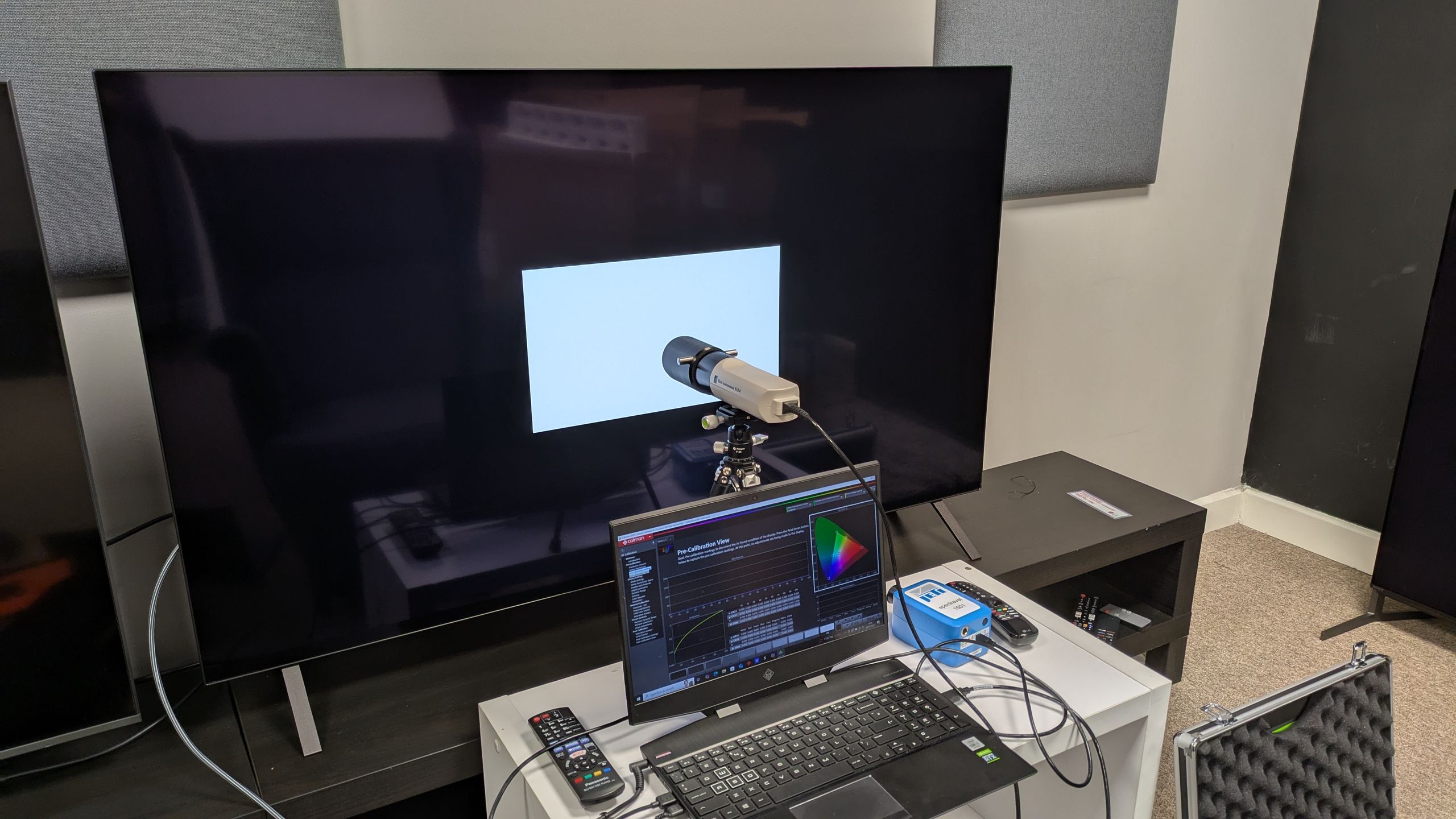
The first and most obvious question is: what is being measured here? And helpfully, LG explained that when announcing its victory. Dimming consistency is a measurement based on setting a reference area in the center of the screen, measuring the maximum and minimum brightness, and then reducing the measured area to 1/10th of the panel, then 11/1,000th of the panel, moving through 5/1,000th, and finally down to 2/1,000th.
If the minimum and maximum brightness levels remain the same across measurements, you’re looking at high dimming consistency. But if it varies, it means the dimming is more variable depending on the window’s size.
Given that OLEDs don’t use backlights and have very small self-emissive pixels, then of course you’d expect an OLED to do very well in a test that, frankly, might as well have been named the ‘Is this an OLED?’ test. LG’s OLEDs got full marks.
The second question is: which panels were tested, and how big were they? We don’t have that information, so while a 43% consistency score for LCD sounds bad, we don’t know if we’re comparing like with like, if we’re comparing the same sizes of panels, or if we’re comparing high-end OLED with low-end LCD (presumably so).
Even if we assume the test treats RGB mini-LED as a high-end LCD panel option, there are different tiers of RGB panels. The likes of Hisense and TCL are making more budget options as well as high-end ones.
Next thought: where is QD-OLED in this test? LG Display’s OLEDs are the first to score 100% in this test, but is that partly because the other tech likely to score 100%, which is also made by rival Samsung Display, isn’t included?
And I have the same thought about micro-LED screens. Again, you’d assume this would score 100%, given that it’s also self-emissive, but it doesn’t seem to be included.
And finally, I’m bemused by this: LG Display says that “This further highlights OLED as the optimal display for connecting humans and AI. In the AI era, high luminance, high resolution, and high color gamut performance are essential,” which is a strange claim for a tech largely used to type things into a prompt.
And that sentence might sound like an oversimplified joke on my part, but LG also said, “Having achieved 100% dimming consistency, OLED can deliver the rich visual information generated by AI in a natural and precise manner”, which really doesn’t sound like a boast that text looks good on OLED. Which, I guess, it does.
For all my snark, I do think this is an interesting piece of information, even if it is mostly preaching to the converted: there’s a reason so many of the best TVs for all budgets in our guides are OLED. There’s no doubt that good OLEDs can deliver better contrast consistency than backlit TVs.
But the margin between the best of each tech is getting smaller and smaller, and it arguably feels like increasingly specific tests are being employed to keep OLED seeming more clearly superior.

The best TVs for all budgets
Follow TechRadar on Google News and add us as a preferred source to get our expert news, reviews, and opinion in your feeds. Make sure to click the Follow button!
And of course, you can also follow TechRadar on YouTube and TikTok for news, reviews, unboxings in video form, and get regular updates from us on WhatsApp too.
